Charging Station in Underground Parking: What Tenants and Owners Need to Know
 Kamilya
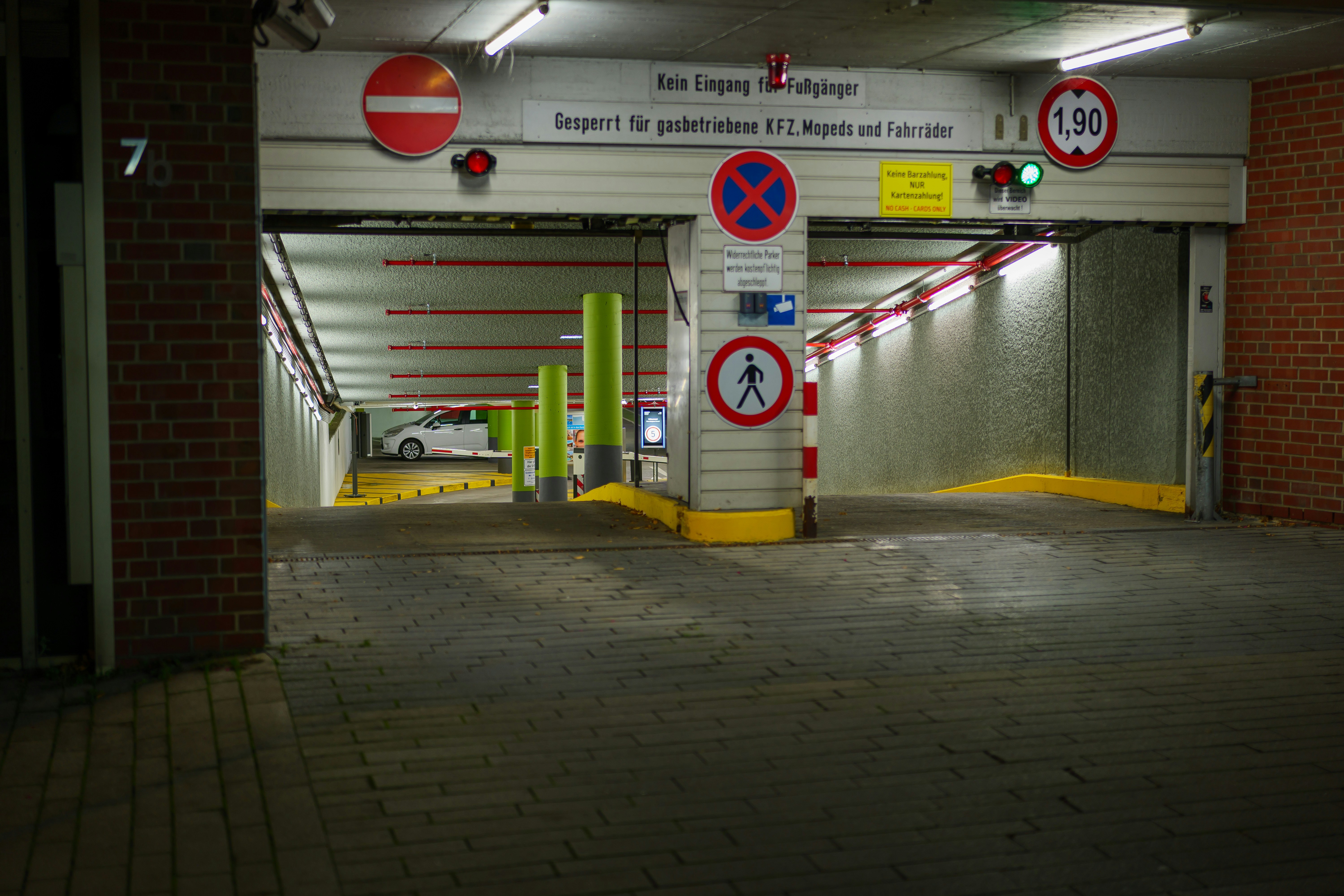
Anyone who buys, leases or subscribes to an electric car and uses an underground garage will eventually face the question of charging infrastructure. In Switzerland, the path forward depends heavily on the living situation, because different legal requirements, technical standards and cost models apply depending on whether the property is rented or held as condominium ownership. This article provides a factual overview of the framework for charging in underground parking.
Legal Framework in Switzerland

Installing a charging station in an underground garage touches on several areas of law, from tenancy regulations to condominium ownership rules and energy and safety standards. The applicable rules differ depending on the ownership structure.
Tenancy Law
There is currently no statutory right to a charging station for tenants in Switzerland. Under Art. 260a of the Swiss Code of Obligations (OR), structural modifications to a rented property are only permitted with the written consent of the landlord, and this explicitly includes parking spaces in underground garages.
If the landlord grants approval, all conditions should be recorded in writing: cost allocation, liability and the procedure at the end of the tenancy. The law generally provides for compensation if the charging station creates significant added value to the property. Alternative arrangements such as an obligation to remove the station or transfer without compensation are permissible, provided they are agreed in writing.
Condominium and Common Property
Underground garages and their infrastructure are classified as common property in most condominium arrangements. Unilateral installations are therefore not permitted, even on an individually assigned parking space. Under Art. 647d para. 1 of the Swiss Civil Code (ZGB), installing charging infrastructure qualifies as a beneficial structural measure requiring a qualified majority: the majority of owners present or represented at the assembly must approve, and this majority must simultaneously represent the majority of value shares.
An exception exists for enclosed parking boxes designated as exclusive-use property, where independent action may be possible under certain circumstances. Even in such cases, the obligation to inform the community remains in place.
Energy and Safety Regulations
Two sets of standards form the technical framework: the Low-Voltage Installation Standard SN 411000 (NIN) issued by Electrosuisse, and the SIA 2060 guideline on "Infrastructure for Electric Vehicles in Buildings". The NIN governs the proper execution of electrical installations, while SIA 2060 defines specific requirements for planning and retrofitting buildings with charging infrastructure.
Only licensed electrical installers may carry out this work. The installation must also be reported to the local grid operator, with charging stations up to 11 kW requiring notification and units from 22 kW requiring formal approval.
Permits and Responsibilities
The formal procedures differ considerably depending on the usage and ownership situation.
Procedure for Tenants
The first step necessarily leads to the property management or landlord, since no installation is permitted without written consent, regardless of who bears the cost. It can be worthwhile to survey other tenants in the building beforehand: if there are additional interested parties, the request carries more weight and the landlord is more likely to recognise the need for a comprehensive solution.
Landlords typically require a written application, an overview of the planned measures, a quote from a certified installer and a clear cost breakdown. Industry guides such as the "Guidelines for Charging Infrastructure in Rental Properties", developed jointly by the Swiss Tenants' Association, the Homeowners' Association and the automotive and energy sectors, can facilitate the conversation.
Procedure for Owners
For a detached house with its own garage, commissioning a certified installer and reporting the installation to the grid operator is sufficient. In condominium ownership, by contrast, the request must be submitted to the property management and placed on the agenda of the next owners' assembly. An early feasibility assessment by an electrical engineering firm is advisable, as it provides a solid basis for decision-making at the assembly.
Role of Property Managers and Communities
Property managers coordinate communication between the parties, collect quotes, organise votes and ensure proper documentation of resolutions. In multi-unit buildings with numerous parking spaces, they work to ensure that a scalable system is planned from the outset rather than a patchwork of individual solutions. Transparent record-keeping facilitates both future expansions and tenant changes.
Costs and Financing
Costs for a charging station in underground parking vary widely, influenced by factors ranging from building fabric and cable runs to the chosen wallbox model.
One-Off Installation Costs
Total costs for a wallbox including installation in Switzerland typically range from CHF 1,500 to CHF 5,000. The charging unit itself costs between CHF 500 and CHF 2,000 depending on model and features, with basic models available from around CHF 650. Installation costs range from CHF 500 to CHF 3,000 and depend largely on the distance to the distribution board, the condition of the existing electrical installation and any wall penetrations or additional cable channels required.
In underground garages of multi-unit buildings, additional costs frequently arise for the basic infrastructure, including central cabling, and for the load management system that becomes practically essential with multiple charging points.
Running Costs
Operating costs consist primarily of electricity. At an average consumption of 15 to 20 kWh per 100 kilometres, an annual mileage of 15,000 kilometres and an electricity price of approximately CHF 0.29 per kWh (as of 2025), annual electricity costs amount to roughly CHF 650 to 870. This is considerably lower than the fuel costs of a comparable combustion-engine vehicle. Annual maintenance of the wallbox by a certified technician costs approximately CHF 200.
Cost Allocation
The basic infrastructure of the underground garage, meaning cabling, distribution equipment and load management, is typically financed by the property owner or the community, while each user pays for their own individual wallbox. For rented properties, the landlord may classify the investment in basic infrastructure as a value-enhancing measure, which can justify a rent increase. Electricity costs are settled according to the polluter-pays principle.
Cantons and municipalities offer various subsidy programmes: the City of Zurich covers up to 60 per cent of basic installation costs, while the Canton of Lucerne provides CHF 400 per parking space in multi-unit buildings. Checking energiefranken.ch before commencing work is advisable.
Technical and Practical Implementation in Existing Buildings

Electrical Infrastructure
Most residential buildings were not designed for the electricity demand of electric vehicles. When vehicle charging is added on top of heat pumps, lifts and household consumption, the grid connection can reach its limits. A load management system dynamically distributes the available capacity across all connected charging stations and prevents overloads. The Swiss Homeowners' Association (HEV) and other industry bodies recommend such smart systems as standard for multi-unit installations rather than isolated individual solutions.
Installation Standards and Safety
Charging station installation may only be carried out by licensed electrical installers. Self-installation qualifies as high-voltage work and is not permitted in Switzerland.
According to specialist bodies such as EMPA and the Swiss Fire Prevention Advisory Service (BFB), electric vehicles pose no greater fire risk than combustion-engine vehicles, which is why the same fire protection regulations apply in underground garages. Additional requirements only come into effect for parking facilities exceeding 1,200 m², where powder extinguishers near charging stations are mandatory. Positioning charging stations close to the entrance and exit is recommended to ensure easy access for emergency services. Charging from a standard household socket (T12/T13) is strongly discouraged, as these sockets are not designed for the sustained load required and pose a fire risk if they overheat.
Planning, Installation and Commissioning
The process ideally begins with a feasibility assessment by an electrical engineering firm, which evaluates the existing infrastructure and develops a concept for the desired number of charging points. Once planning and approvals are in place, installation proceeds followed by inspection and reporting to the grid operator. Depending on complexity, the entire process can take several weeks to months. Thorough documentation of every step serves as evidence for insurance purposes and facilitates future expansions.
Operation, Maintenance and Billing
Wallboxes are largely maintenance-free but should be checked regularly for visible damage and correct functioning of protective devices. Individual consumption tracking is available through integrated electricity meters, RFID cards or app-based billing systems that record usage per person and enable fair, consumption-based settlement.
Common Challenges and Solutions
Limited Connection Capacity
In many existing buildings, the grid connection is insufficient for charging several vehicles simultaneously at full power. Intelligent load management distributes the available capacity across individual charging points so that no bottleneck occurs. Vehicles charge more slowly as a result, which is generally not a limitation when charging overnight. Upgrading the building's grid connection through the energy supplier is rarely necessary and involves considerable expense.
Shared Use
When multiple parties use a charging infrastructure, questions of fairness and billing arise. Established practice separates basic infrastructure from individual wallboxes: the community finances the pre-wiring and load management, while each user covers the cost of their own charging station. Modern billing systems with MID-compliant meters or RFID-based solutions ensure consumption-based electricity settlement, and external service providers can further reduce the administrative burden.
Future Scalability
The number of electric vehicles on Swiss roads continues to grow. Planning today should therefore prioritise scalable basic infrastructure: central pre-wiring extending to the vicinity of all parking spaces, onto which individual wallboxes can later be added with minimal effort.
Political developments reinforce this recommendation. In June 2025, the Council of States adopted Motion 23.3936 by National Councillor Jürg Grossen (GLP), tasking the Federal Council with creating the legal foundations for a "right to charge" within two years. Tenants and condominium owners should no longer be able to be categorically prevented from installing a charging station. The specific details are still pending, but the direction is clear.
Key Takeaways
Tenants currently have no statutory right to a charging station; written consent from the landlord is mandatory (Art. 260a OR). In condominium ownership, a resolution by the owners' assembly with a qualified majority is required (Art. 647d ZGB). Installation may only be carried out by licensed electrical installers under the NIN (SN 411000) and SIA 2060 standards. Total costs for a wallbox including installation range from CHF 1,500 to CHF 5,000, with cantonal and municipal subsidy programmes available to reduce the outlay. Intelligent load management is practically indispensable where multiple charging stations are involved. Community-based solutions with scalable basic infrastructure outperform individual installations in nearly every respect. The Federal Council has been tasked with drafting legislation for a future "right to charge".
Conclusion
A charging station in underground parking is an infrastructure matter that combines legal, technical and financial dimensions. Different prerequisites apply to tenants and condominium owners, and in both cases the process requires clear agreements, professional installation and forward-looking planning. Investing in scalable systems, involving all stakeholders and making use of available subsidies creates a solution that meets not only current demand but is also prepared for rising needs in the years ahead. With the political momentum around the "right to charge", the question is no longer whether charging infrastructure in residential buildings will expand, but how.
For those interested in electric mobility without a long-term purchase commitment: a car subscription from CARIFY makes it possible to test different electric vehicles flexibly and without obligation.




'%20fill='%23000000'%3e%3cg%20id='icons'%20transform='translate(56.000000,%20160.000000)'%3e%3cpath%20d='M259.821,7453.12124%20C259.58,7453.80344%20258.622,7454.36761%20257.858,7454.53266%20C257.335,7454.64369%20256.653,7454.73172%20254.355,7453.77943%20C251.774,7452.71011%20248.19,7448.90097%20248.19,7446.36621%20C248.19,7445.07582%20248.934,7443.57337%20250.235,7443.57337%20C250.861,7443.57337%20250.999,7443.58538%20251.205,7444.07952%20C251.446,7444.6617%20252.034,7446.09613%20252.104,7446.24317%20C252.393,7446.84635%20251.81,7447.19946%20251.387,7447.72462%20C251.252,7447.88266%20251.099,7448.05372%20251.27,7448.3478%20C251.44,7448.63589%20252.028,7449.59418%20252.892,7450.36341%20C254.008,7451.35771%20254.913,7451.6748%20255.237,7451.80984%20C255.478,7451.90987%20255.766,7451.88687%20255.942,7451.69881%20C256.165,7451.45774%20256.442,7451.05762%20256.724,7450.6635%20C256.923,7450.38141%20257.176,7450.3464%20257.441,7450.44643%20C257.62,7450.50845%20259.895,7451.56477%20259.991,7451.73382%20C260.062,7451.85686%20260.062,7452.43903%20259.821,7453.12124%20M254.002,7439%20L253.997,7439%20L253.997,7439%20C248.484,7439%20244,7443.48535%20244,7449%20C244,7451.18666%20244.705,7453.21526%20245.904,7454.86076%20L244.658,7458.57687%20L248.501,7457.3485%20C250.082,7458.39482%20251.969,7459%20254.002,7459%20C259.515,7459%20264,7454.51465%20264,7449%20C264,7443.48535%20259.515,7439%20254.002,7439'%20id='whatsapp-[%23128]'%3e%3c/path%3e%3c/g%3e%3c/g%3e%3c/g%3e%3c/svg%3e)