Why the resale value in 2026 is harder to forecast - and what that means for buyers
 Kamilya
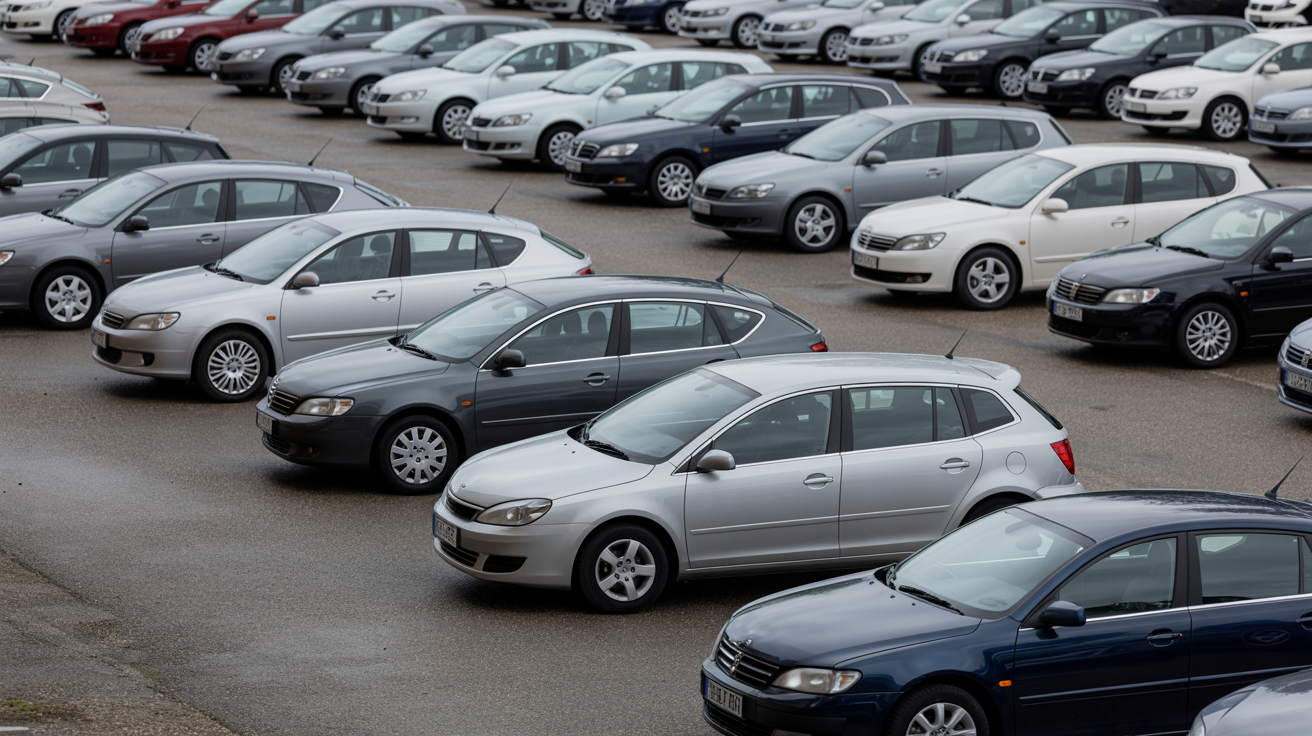
For a long time, the used car market was fairly predictable. When buying a car, you could roughly estimate what it would still be worth a few years later. Those days are over. Forecasting resale value will be a real challenge in 2026 - and it should factor into your next purchase decision.
Why the new uncertainty? Several forces are piling up at once. Electric vehicles are advancing in rapid technological leaps, political requirements keep shifting, and the market is being reshaped. What worked reliably for decades is starting to break down. Traditional projection models are increasingly failing. Anyone buying a car privately today has to think and plan differently than five years ago. The familiar sense of security around future value is fading.
What you will learn in this article
Why forecasting car resale values in 2026 has become significantly more difficult
Which traditional depreciation patterns still apply - and where they are increasingly breaking down
How different vehicle types and powertrains affect resale value
What specific uncertainties electric cars bring when it comes to holding value
Which political, technological, and market-related factors influence residual value projections
What resale value uncertainty means in practical terms for buying decisions
What is meant by a car’s resale value?
Resale value describes how much a vehicle is likely to sell for at a specific point in time. Starting from the original purchase price, depreciation is subtracted - driven by usage, age, and market conditions. Unlike most consumer goods, this figure matters a lot for cars because a substantial amount of money is often tied up in them.
Depreciation is the counterpart to resale value. If a vehicle loses value sharply, little remains when it is sold. Many buyers underestimate this cost factor at the time of purchase, even though depreciation is one of the biggest ongoing expenses alongside fuel, insurance, and maintenance. If a car loses half its value in three years, the resulting annual costs often exceed repair and service expenses.
That’s why resale value is so important when calculating total cost of ownership. A full-cost view shows what you actually pay over the entire period of use. What looks like a bargain at purchase can become expensive if the value collapses after only a few years. Conversely, a higher purchase price can be justified by stronger value retention.

Depreciation over time - typical patterns and figures
Depreciation in the first year
The first year hits hardest. New cars typically lose around 24 to 25 percent of their value almost as soon as they leave the dealership. This sharp drop has several causes that go beyond simple ageing.
The main reason is market logic. Once a vehicle is registered, it is no longer legally considered new. Buyers generally pay less for used cars, even if the car is only a few weeks old and has very low mileage. The dealer margin that is built into the new-car price effectively disappears.
There is also a psychological factor: once a car is registered, it has lost its “new” status - and the price reflects that immediately.
Depreciation after three years
After three years, the average vehicle has lost around half of its original value. This 50-percent mark is a statistical benchmark that has remained relatively stable across many years and segments. Of course, there are substantial differences depending on brand, model, and individual circumstances.
This mid-term phase is especially informative because it aligns with the typical holding period of many first owners. After three years, manufacturer warranties often expire and many leasing contracts come to an end. The used car market for three-year-old vehicles is particularly active, which leads to relatively stable pricing patterns.
Even so, clear differences already show up here between brands that hold value well and those that lose appeal more quickly.
Long-term depreciation from the fourth year onwards
From the fourth year onwards, depreciation stabilises noticeably. Instead of dramatic early losses, value tends to decline more slowly and evenly. Annual depreciation in this phase is typically around 5 to 6 percent of the vehicle’s current value - not of the original purchase price.
This stabilisation has several explanations. The vehicle has already passed the steepest part of the depreciation curve. Residual value increasingly reflects practical utility rather than the image of a relatively new car. Buyers in this segment often focus on solid, reliable vehicles at reasonable prices and are less driven by brand or model.
Factors that influence resale value
Brand, model, and vehicle segment
Not all cars lose value at the same pace. Brand plays a central role. Manufacturers known for quality, reliability, and low running costs tend to perform better when it comes to value retention.
German premium brands often hold value surprisingly well, while less established brands or brands perceived as technically fragile often depreciate more.
The vehicle segment also matters. Small cars often lose a higher percentage because they compete in a price-sensitive segment. Mid-size cars tend to depreciate more moderately, while SUVs have benefited from strong demand in recent years.
Condition, maintenance, and history
The visible and documented condition of a vehicle directly affects what buyers are willing to pay. A complete service history showing all recommended maintenance carried out at authorised dealers builds trust and supports higher prices.
Missing documentation or servicing done exclusively at independent workshops can raise doubts, even if the work was done properly.
Accident history is another decisive factor. Accident-free vehicles usually achieve significantly higher prices than vehicles with documented repairs, even if repairs were professional. The number of previous owners also matters. A single-owner car suggests consistent care and is valued accordingly.
Equipment, mileage, and usage
Optional equipment affects resale value unevenly. Features like navigation, automatic climate control, or heated seats can increase value noticeably. Other extras add little or nothing at resale.
Highly individual configurations that don’t appeal broadly can even reduce resale value.
Mileage is one of the most important measurable factors. Certain thresholds trigger sharp price drops. A car with 98,000 kilometres often sells for much more than the same model with 102,000 kilometres, even though the real-world difference is small. The psychological barrier of 100,000 kilometres is real and it shows directly in resale prices.
Market demand and economic conditions
The used car market follows supply and demand. When certain models or segments are in demand, prices stabilise and can even rise. Oversupply, on the other hand, pushes prices down.
This dynamic can vary by region and is influenced by broader conditions such as interest rates, purchasing power, and consumer confidence.
Seasonal effects also play a role. Convertibles tend to sell better in spring than in autumn, while all-wheel-drive vehicles are more sought-after before winter. Regional preferences matter too: compact, efficient cars perform better in cities, while spacious vehicles with towing capability tend to do better in rural regions.
Electric cars and resale value - specific uncertainties
Past experience with electric vehicles
The early years of the electric vehicle boom showed that EVs often depreciated much more sharply than combustion-engine cars. Models from 2020 to 2022 sometimes lost more than 60 percent of their value. In some cases, this happened within just two years.
This shocked many buyers and reinforced scepticism toward electric mobility.
The reasons are straightforward. Battery technology is evolving fast. Newer models offer more range, faster charging, and better everyday usability. Someone selling a 2020 EV with a 300-kilometre range is competing against newer models offering 500 or 600 kilometres.
Short model cycles can make older EVs feel outdated quickly.
Current developments and outlook
The situation is improving gradually. Newer EV models are showing more stable value patterns as technology matures and ranges reach levels that work for most users. Differences between model generations are shrinking, which slows depreciation.
Battery warranties are becoming increasingly important. Manufacturers that offer strong guarantees on battery capacity build trust in the used market. Buyers know they are not carrying the full risk of expensive battery issues, which increases willingness to pay. Even so, range remains the central factor.
Comparison with combustion engines
For now, combustion-engine vehicles still offer better forecast reliability. Their technology is mature, depreciation curves have been documented for decades, and buyers generally know what to expect.
This forecast reliability has value in itself, especially in uncertain times.
Demand also supports value stability. Despite political debates about bans, many buyers still actively seek petrol or diesel cars because the infrastructure is familiar and they want to avoid range concerns. As long as that demand persists, residual values remain comparatively stable.
Political, technological, and regulatory uncertainties 2025/2026
The biggest challenge for resale value projections is political uncertainty. Discussions about driving bans, emission zones, and the phase-out of combustion engines fundamentally change the framework. What is allowed and accepted today could be restricted tomorrow.
That uncertainty directly affects used car prices.
Technological developments intensify the issue. New battery generations, solid-state batteries, or major drivetrain breakthroughs could make today’s vehicles feel outdated very quickly. Anyone buying an EV today can’t know whether the next big leap arrives in two years or five - or what that does to resale prices.
Regulatory changes are also hard to anticipate. Policymakers swing between ambitious climate targets and the realities of industry and voters. Subsidies are introduced, changed, or removed. This volatility makes long-term forecasts far less reliable.
Calculating and forecasting resale value
Calculation methods and benchmarks
The percentage method is the most common way to estimate depreciation. The purchase price is the starting point, and a certain percentage is deducted each year. Well-known benchmarks - around 25 percent in the first year and roughly 5 to 6 percent in later years - are based on statistical averages.
The absolute method uses fixed amounts rather than percentages. It is less common but can be more accurate for certain vehicle types. Time-and-usage models combine age and mileage to create more differentiated projections.
Data sources and market models
Professional residual value forecasts rely on large amounts of market data. Dealers, leasing companies, and specialised consultancies collect and analyse millions of transaction records.
These data feed into complex valuation models designed to anticipate future developments.
The limits of these forecasts are now becoming clear. Models that worked reliably for decades struggle when political decisions or technological breakthroughs change the rules quickly. Assumptions of steady, gradual development no longer hold.
Vehicles with comparatively stable resale value
Despite all uncertainty, certain patterns still appear. Vehicles with broad market appeal that are neither too specialised nor too generic tend to perform better.
Models viewed as reliable and associated with low running costs are easier to sell and achieve higher prices.
Value-stable concepts often share a timeless design that doesn’t look dated after a few years. Powertrains that fit many use cases, without depending on an uncertain technological leap, currently offer the best reliability for projections.
This helps explain why conventional hybrids, with their proven technology, are currently showing relatively stable residual values.
Practical tips for buyers dealing with value uncertainty
Strategic purchase decisions
The first rule is simple: buy based on real needs, not resale expectations. The longer you plan to keep a vehicle, the less the exact residual value matters. If you plan to keep a car for eight or ten years, it matters little whether it is worth 45 or 52 percent after three years.
Realistic expectations are crucial. Don’t assume your vehicle will outperform the market average just because it is well maintained. Conservative planning is smarter - and if you end up with a higher resale price, that’s a bonus.
Preserving value in everyday use
Care and maintenance are the levers every owner can directly influence. A well-maintained vehicle with complete documentation sells for more because buyers trust it. Regular servicing at authorised dealers may cost more, but it often pays off at resale. A complete service record is literally worth money.
Keeping mileage lower also helps. Anyone who can use alternative transport options or share journeys keeps mileage down and value higher.
Extra caution is needed around psychological thresholds: selling at 99,000 kilometres typically yields more than selling at 101,000 kilometres.
Key insights
Car resale values in 2026 are significantly more uncertain than in previous years
Technological leaps, political intervention, and market shifts undermine traditional projection models
Electric vehicles are especially hard to forecast, while combustion-engine cars remain more predictable for now
Residual value projections are losing reliability and should be interpreted conservatively
Buying decisions should be guided more by real usage needs than by optimistic resale assumptions
Conclusion: Flexibility and pragmatism instead of rigid planning
The days when resale values could be forecast with precision are over. Upheaval in the automotive market, driven by technology, politics, and shifting preferences, has turned long-term projections into a gamble.
That doesn’t make buying a car impossible, but it does require a change in approach.
Instead of fixating on hypothetical resale values three or five years from now, buyers should focus more on the concrete benefits during the planned ownership period. Total cost of ownership still matters, but resale value uncertainty must be built into the calculation. Conservative assumptions protect against unpleasant surprises.
Flexibility becomes an advantage. Shorter planning horizons, a willingness to adapt as conditions change, and healthy scepticism toward overly optimistic projections help buyers make better decisions. Resale value remains important, but it should not become the sole criterion as its predictability fades.