Chinese Electric Cars in Switzerland 2026: Brands, Prices & Buyer's Guide
 Kamilya
Chinese electric cars have become a fixed feature of the Swiss market in 2026. BYD, MG, Leapmotor and Voyah operate through official importers with Swiss service networks, Lynk & Co joins the line-up in the first quarter, and because Switzerland did not adopt the EU's additional tariffs, prices here are noticeably more attractive than across the border.
What's Changing for Chinese Electric Cars in Switzerland?
In October 2024, the EU introduced additional tariffs of up to 35 percent on electric cars produced in China. Switzerland did not follow this step, which means the price advantage from China reaches buyers here without that detour. From early 2026, the Chinese government also tightened its regulation of EV exports, making grey-market and direct imports more difficult and turning the authorised importer with full warranty into the standard route to ownership.
By February 2026, Leapmotor, BYD and MG had already secured spots among the twenty best-selling electric car brands in Switzerland. Leapmotor sold more vehicles than Mercedes-Benz, Toyota or Ford. BYD has been operating its own centres in Zurich, Schlieren and Geneva-Lancy since 2025, Leapmotor distributes its models through the Stellantis infrastructure, and Lynk & Co opened roughly ten sales points in the first quarter of 2026 via existing Volvo partners. For wider context on market trends, see our Swiss EV Market Overview.
Which Chinese Electric Car Brands Are Available in Switzerland?
Six to eight Chinese brands offer an official sales network in Switzerland in 2026, with test drives, full warranty and regional service partners. Three categories shape the offer: volume manufacturers such as BYD, MG and Leapmotor occupy the mid-price segment, NIO, Xpeng and Voyah compete with Tesla and the German premium marques, and Lynk & Co positions itself as a hybrid brand between Chinese production and European engineering.
BYD Models in Switzerland
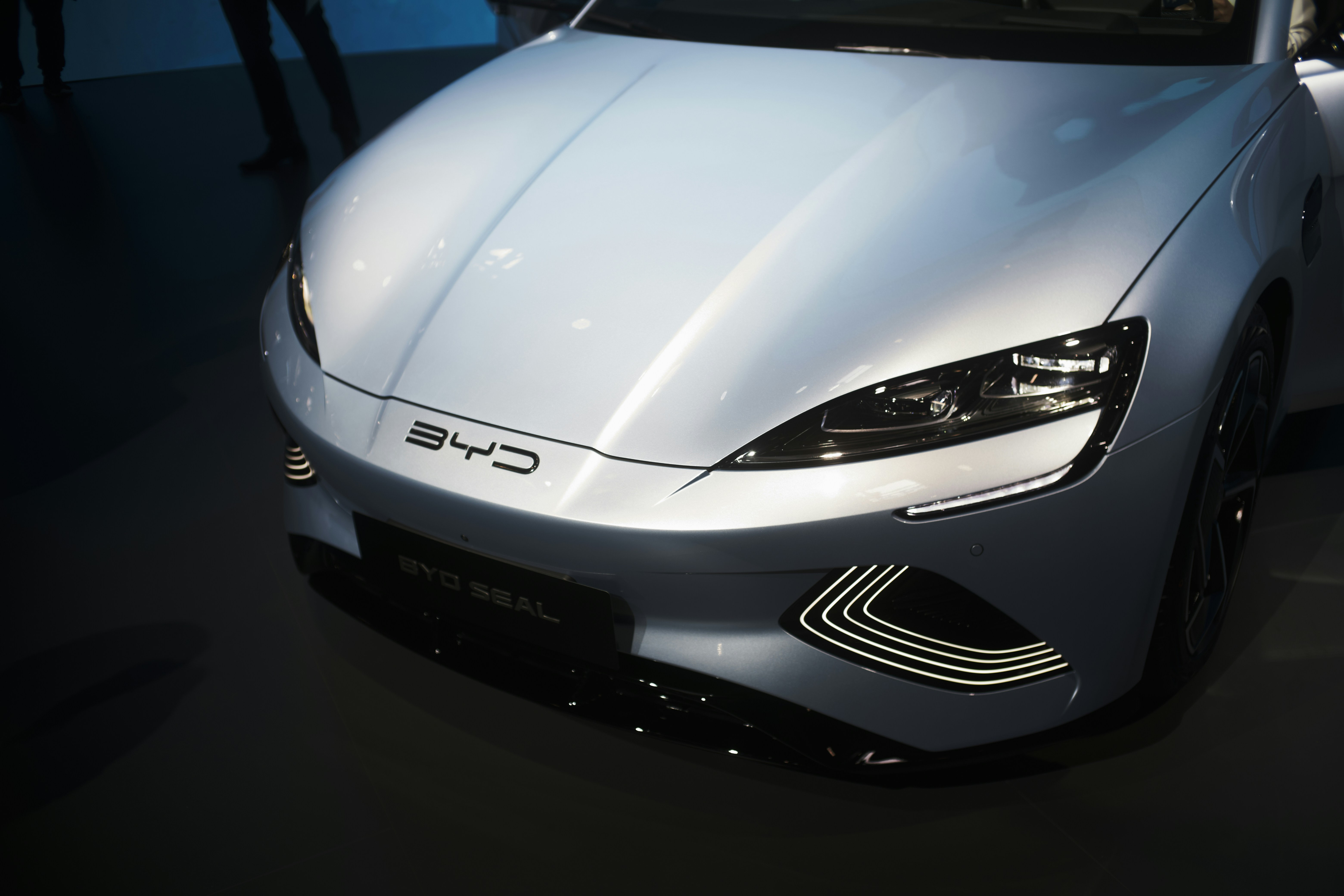
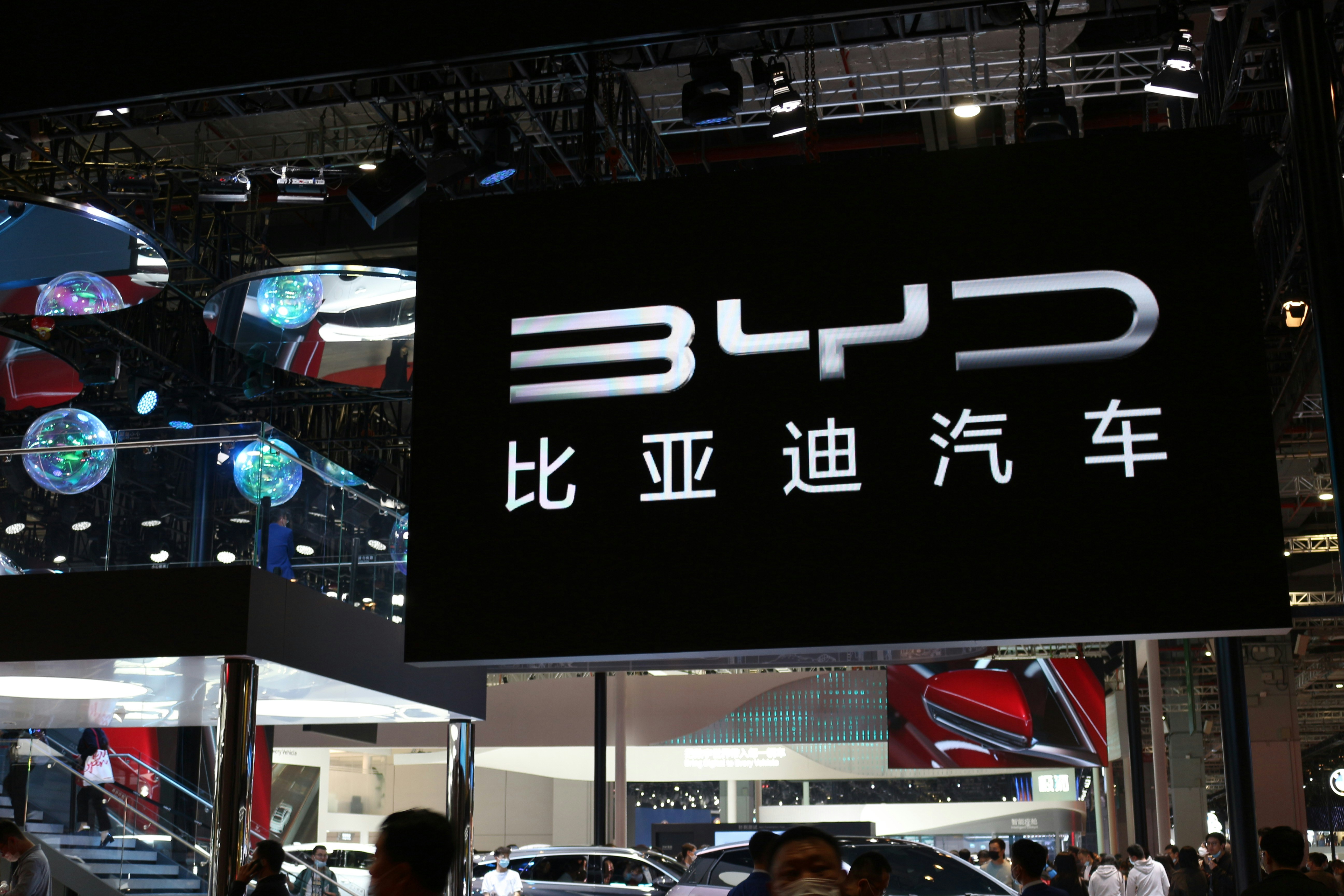
BYD has been the world's largest manufacturer of pure electric cars since 2024 and operates in Switzerland through BYD Harmony Auto Switzerland with centres in Zurich, Schlieren and Geneva-Lancy. The brand's signature is the Blade Battery, an LFP cell architecture that performs better in crash tests than conventional NMC packs. The model range covers everything from the compact Dolphin Surf to the premium Sealion 7 SUV, complemented by plug-in hybrids with ranges up to 1'350 kilometres. The full overview is available on our BYD brand page.
Dolphin
With the Dolphin Surf, BYD covers the entry segment: 4.29 metres in length, 88 hp, 220 kilometres of WLTP range that climbs above 350 kilometres in city use. Priced from around CHF 21'990 and capable of fast charging in 30 minutes, the car competes directly with the Renault Twingo Electric and Hyundai Inster.
Atto 3
In the volume segment, the 4.46-metre Atto 3 EVO lines up against the VW ID.3 and Hyundai Kona Electric. From CHF 39'900, buyers receive a heat pump, touchscreen cockpit and assistance package as standard, while the 60-kWh Blade battery delivers WLTP ranges up to 420 kilometres.
Seal
With the Seal, BYD takes direct aim at the Tesla Model 3. The 4.80-metre saloon combines an 82.5-kWh battery with ranges up to 570 kilometres and produces 530 hp from two motors in the top version, with an entry price of around CHF 49'990.
Tang
As a seven-seater, the Tang targets families with greater space requirements. At 4.87 metres in length, the 86.4-kWh battery delivers WLTP ranges up to 400 kilometres with all-wheel drive, and the entry price from around CHF 69'990 substantially undercuts comparable models such as the Volvo XC90 Recharge or Kia EV9.
MG Motor Models in Switzerland
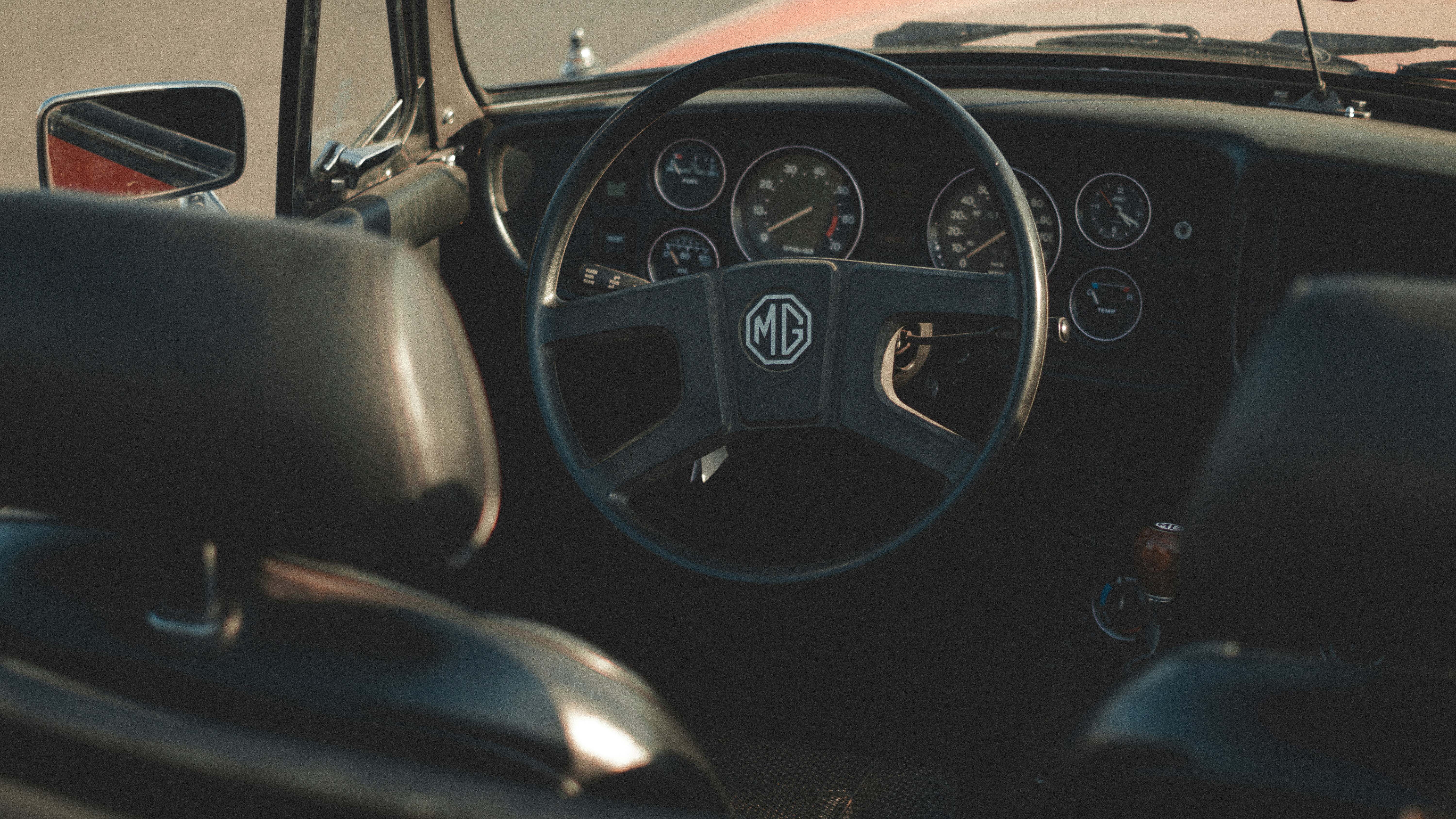
MG brings one of the densest Chinese EV distribution networks in Europe to the table, expanded across Switzerland to over 70 dealers. Behind the brand stands the SAIC group, combining British heritage with Chinese production, which explains the short delivery times and the Euro NCAP top ratings achieved by current models. Models and price lists are available on our MG brand page.
MG4 Electric
At 4.29 metres in length, with rear-wheel drive and a 64-kWh battery, the MG4 reaches WLTP ranges up to 450 kilometres from around CHF 28'990, placing it among the most accessible Chinese EVs in Switzerland. The XPower variant with 435 hp and 3.8 seconds to 100 km/h shows that MG also takes the performance segment seriously.
Cyberster
As one of the few fully electric roadsters on the market, the Cyberster relies on scissor doors, an AWD variant with 510 hp, 3.2 seconds to 100 km/h and WLTP ranges up to 507 kilometres in the RWD version. The Swiss list price starts at CHF 63'990.
JAC Models in Switzerland
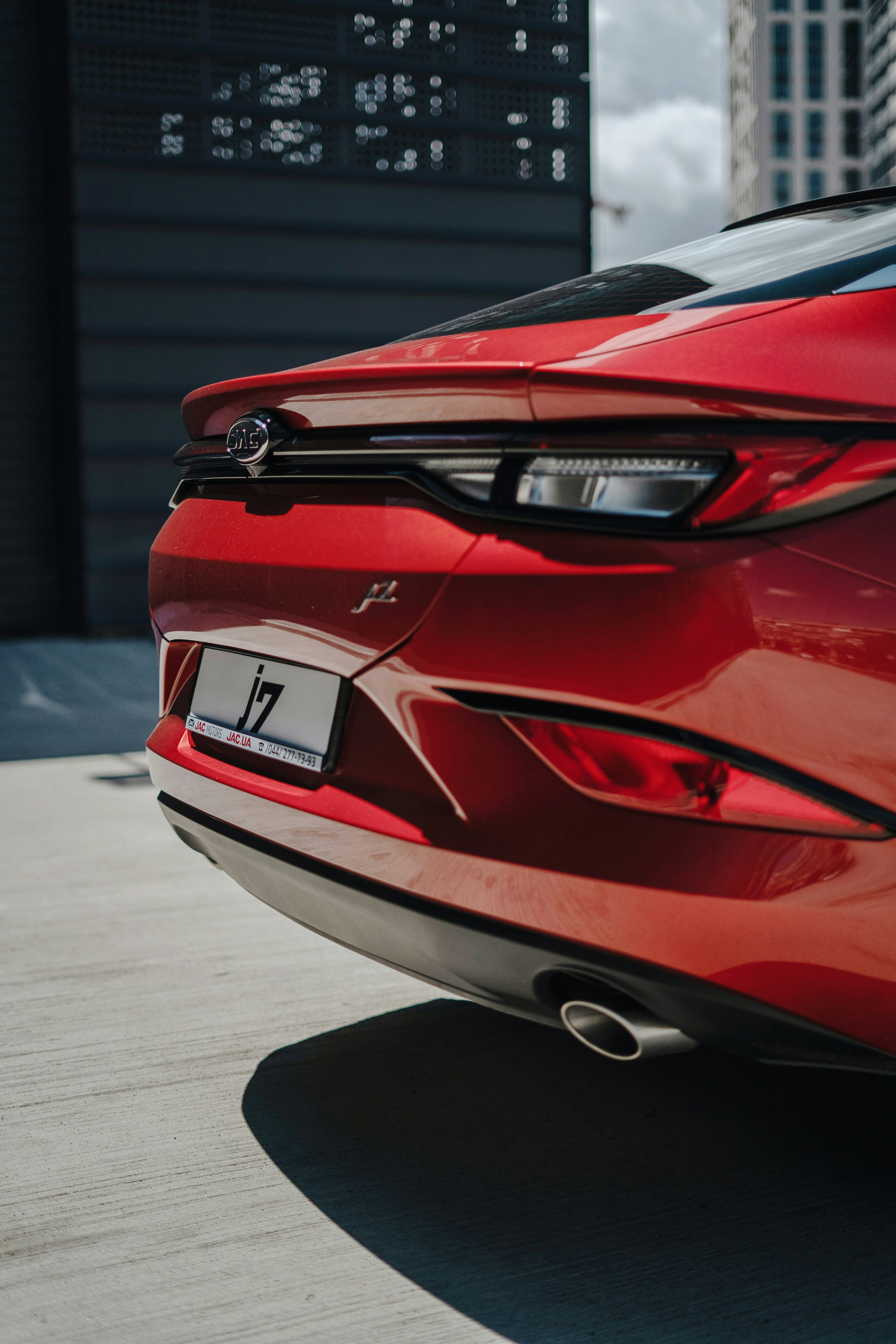
JAC has established itself in Switzerland as a supplier of particularly affordable entry-level EVs, even if the brand is less well known than BYD or MG. The manufacturer, based in Hefei, ranks among China's older state-owned car producers and has produced for Volkswagen and other Western groups in joint ventures for years.
e-JS1
At an entry price of around CHF 13'000, the JAC e-JS1 is the cheapest fully electric car on the Swiss market. With a 3.75-metre city length and a 30-kWh battery, the realistic range sits between 220 and 260 kilometres, making the car suitable for second-vehicle use or short commuter routes.
e-JS4
A class above sits the e-JS4, a compact SUV at 4.1 metres in length with a 50-kWh battery delivering around 300 to 350 kilometres of range. From CHF 25'000, the model ranks among the cheapest options in the SUV segment without quite matching the build quality of a BYD or MG.
Leapmotor in Switzerland
Leapmotor entered the European market in 2024 through a joint venture with Stellantis, which sets the brand apart from other Chinese suppliers in terms of service. Distribution runs through Emil Frey AG, while the service network leverages the existing Stellantis infrastructure (Peugeot, Citroën, Opel, Fiat) and delivers a country-wide workshop network with Swiss mechanics from market launch.
The current line-up includes the T03 city car from CHF 16'990, the B10 compact SUV from CHF 29'900 and the C10 family SUV from CHF 34'990, optionally as a REEV range-extender or as a 4x4 from CHF 39'900. In February 2026, the thousandth car was delivered in Switzerland, a remarkable pace following the market launch in late 2024. The warranty covers five years or 100'000 kilometres on the vehicle and eight years or 160'000 kilometres on the battery.
Premium Segment: Chinese EV Brands in Switzerland
In the segment above the volume business, NIO, Xpeng and Voyah compete against Tesla and the established German marques, with range, comfort and individual special concepts such as swappable batteries.
NIO
NIO has built its business model around battery-swap stations, where an empty battery can be replaced with a full one within five minutes. In Switzerland, the brand is still in build-up phase, but initial sales points are active, and models such as the ET5, ET7 and EL7 deliver ranges between 380 and 580 kilometres from around CHF 60'000.
Xpeng
At Xpeng, the in-house XNGP pilot software sits at the centre of the product strategy. The Emil Frey Group is gradually expanding the Swiss distribution network, while the G6 mid-size SUV (positioned against the Tesla Model Y) and the G9 premium SUV are priced between CHF 50'000 and CHF 75'000.
Voyah
Voyah belongs to the Chinese state-owned Dongfeng group and is distributed in Switzerland by Noyo Mobility AG, based in Rotkreuz. The current flagship is the Voyah Free, a 4.9-metre SUV with 489 hp of all-wheel drive, 4.4 seconds to 100 km/h and a 106.7-kWh battery for 500 kilometres of WLTP range, from CHF 69'900 in full specification.
Lynk & Co Launch 2026
Lynk & Co officially enters the Swiss market for the first time in 2026. The brand belongs to the Geely group (the same holding as Volvo and Polestar) and was founded in 2016 as a joint venture with Volvo Cars in Gothenburg, Sweden, which blurs the line between "Chinese" and "European" cars. Production takes place in China, while design and engineering happen in Sweden, with the service network drawing partly on Volvo infrastructure.
The market entry in the first quarter of 2026 takes place via roughly ten sales points operating through existing Volvo partners. The line-up includes the 01 plug-in hybrid from CHF 43'995, the fully electric 02 with 66-kWh battery and 445 kilometres of WLTP range (sharing a platform with the Volvo EX30 and Smart #1), and the flagship 08 plug-in SUV with 350 hp and 200 kilometres of pure electric range. The original car-subscription model is being phased out in favour of classic sales, leaving flexibly minded users to turn to Swiss subscription providers such as CARIFY once the models are listed there.
Why Are Chinese Electric Cars Competitive in Switzerland?
The most important competitive advantages can be summarised in five points:
Price-performance: At BYD, MG or Leapmotor, buyers receive a fully equipped compact or mid-size SUV with a large battery for CHF 30'000 to CHF 40'000, where comparable European models often start CHF 5'000 to CHF 10'000 higher.
Standard equipment: Heat pump, large touchscreens, Level 2 driver assistance, panoramic roof and wireless charging are typically standard with Chinese brands, while these elements often carry a surcharge in Europe.
Battery technology: CATL and BYD Blade rank among the global top tier, with LFP batteries (BYD) scoring on safety and longevity and NMC batteries (CATL in many models) delivering greater energy density and range.
Charging speed: 800-volt architecture as found in the Leapmotor C10 4x4 and 168 kW DC fast charging are practically standard in the Chinese mid-class segment in 2026.
Swiss price advantage: Without the EU import tariffs, the price gap to European competitors remains noticeably wider here than in Germany or France.
These advantages have limits. Brand perception of Chinese manufacturers in Switzerland is still developing, and resale values after three to four years are harder to predict than for VW, BMW or Tesla. ADAC tests from 2025 also show that European manufacturers retain the edge in fine-tuning driver assistance and software interfaces. Buyers who prefer not to carry the residual-value risk themselves are better served by a flexible car subscription, since the question of what a three-year-old BYD or Leapmotor will be worth in 2029 then sits with the provider.
How Do Service and Warranty Work for Chinese EV Brands?
For Chinese electric cars, the certainty around repairs and maintenance depends directly on the sales channel. The sensible route is therefore to buy exclusively from authorised Swiss importers with their own or affiliated service networks; background information is available in our EV Warranty Guide.
Official Importers and Service Networks
Behind every relevant Chinese brand stands an established Swiss importer. BYD operates through BYD Harmony Auto Switzerland with its own centres and partner workshops, while Leapmotor and Xpeng draw on Emil Frey AG and the Stellantis service network. MG has more than 70 Swiss dealers, Voyah is imported by Noyo Mobility AG from Rotkreuz, and the Lynk & Co service operates through the ten new sales points and Volvo workshops since 2026. A look at the importer's website ahead of any purchase pays off, since the networks are still thinly represented in more rural cantons.
Warranty and Buyer Protection
Chinese brands offer warranty terms in Switzerland that match or exceed many European manufacturers: BYD provides eight years or 200'000 kilometres on the high-voltage battery, Leapmotor grants five years or 100'000 kilometres on the vehicle plus eight years or 160'000 kilometres on the battery, and MG works with seven years or 150'000 kilometres of vehicle warranty. These conditions sit above the European standard. The more sensitive question concerns long-term spare-parts supply and software updates, where the presence of established importers significantly reduces the risk of a sudden market withdrawal.
Where to Find Chinese EV Dealers in Switzerland?
The dealer network in 2026 concentrates on the major economic regions around Zurich, Geneva, Basel and Bern. Locations and configurators are accessible on the brand websites byd-harmonyauto.ch, mgmotor.ch, leapmotor.net/ch-de and voyah.ch, while NIO and Xpeng continue to expand their brand experience centres in Zurich and Geneva. BYD and MG enable a fully online purchase including direct ordering and home delivery.
For buyers who want to test a model in everyday conditions before committing, CARIFY offers Chinese EVs from various brands on a subscription basis. After one or three months, the question of whether the car suits the usage profile becomes answerable in earnest; delivery happens within six to eight days, optionally to the front door.
Which Chinese Electric Car Suits Whom?
The choice depends on usage profile and budget. For city commuters with short distances, the MG4 Electric, BYD Dolphin Surf, Leapmotor T03 or JAC e-JS1 fit between CHF 13'000 and CHF 30'000, with ranges of 220 to 450 kilometres and compact dimensions. Families with greater space needs are better served by the BYD Atto 3 EVO, BYD Tang, JAC e-JS4 or Leapmotor C10, which offer five to seven seats, generous boot space and ranges between 300 and 420 kilometres at prices from CHF 25'000 to CHF 70'000.
Buyers who place value on software updates and driver assistance will find the most software-centric strategies at NIO and Xpeng. Sporty drivers with a roadster preference turn to the MG Cyberster with its electric drivetrain, price-conscious buyers to the Leapmotor T03 from CHF 16'990, and in the premium segment, the Voyah Free undercuts classic German premium SUVs noticeably with a fully equipped specification from CHF 69'900. A test drive at the official dealer is worthwhile regardless of profile, because build quality, seat comfort and operating concepts vary considerably between brands.
Buying a Chinese Electric Car in Switzerland or Testing via Subscription?
Buying a Chinese electric car in 2026 has become considerably easier and safer than the headlines of recent years suggest. Official importers and long warranties dispel many earlier concerns, but the question of mid-term market development and the residual value of individual vehicles in four years remains open.
This is exactly where a flexible car subscription shows its strength. With CARIFY, Swiss buyers gain access to Chinese and European electric cars across more than 200 garage partners nationwide, with freely selectable terms between one month and two years and matching mileage packages. Insurance, motor vehicle tax, maintenance and breakdown assistance are included in the monthly rate, the vehicle becomes available within six to eight days of booking, optionally with home delivery. This makes it possible to test a BYD, MG or Leapmotor risk-free in everyday life; if the brand or model does not suit the profile, a simple switch follows at the end of the contract, without resale, without residual-value discussion and without multi-year commitment.