10 Car Myths Fact-Checked: What Is Actually True?
 Kamilya

Switzerland has one of the highest motorisation rates per household in Europe, yet persistent half-truths about cars continue to be passed down from generation to generation. Red cars go faster. Letting the engine idle to warm up protects it. Cheap petrol causes damage. Who hasn't heard these claims? And who has actually checked them?
This article takes apart ten widely believed car myths, evaluates them with facts from automotive engineering and puts them into the context of Swiss driving practice. Some myths turn out to be stubborn misinformation, others were once justified but are now outdated, and a few actually contain a kernel of truth. The result is surprising every time.
Why Do Car Myths Persist?
Myths rarely appear out of thin air. Many of the rules of thumb that are now considered half-truths were technically correct in the era of carburettors and have become deeply embedded in our collective driving knowledge, even though the technology has long since moved on. Add to that the human desire to translate complex technology into simple mantras, which is perfectly reasonable in itself but does not get automatically updated when the entire industry switches engines. In Switzerland, where vehicles tend to stay on the road longer than in many neighbouring countries, outdated knowledge is particularly persistent.
Hearsay does the rest: anyone who has heard for thirty years that you should warm up the engine before accelerating is unlikely to question whether that still applies to a modern direct-injection engine. The following ten myths show where outdated knowledge still actively causes harm, where it no longer makes a difference, and where the old rule of thumb unexpectedly still holds true.
Myth 1: Red Cars Are More Expensive to Insure
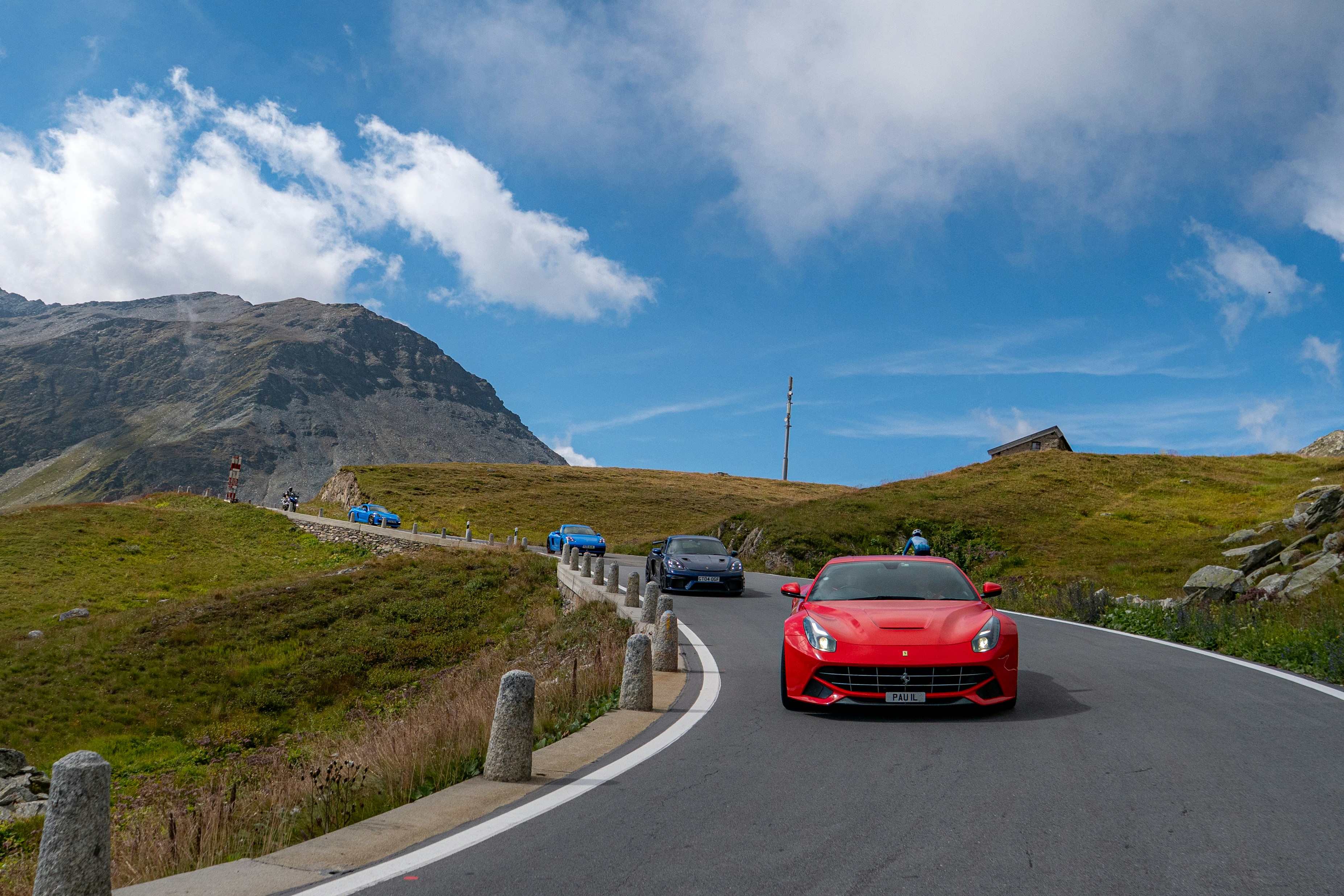
The idea that a red car costs more to insure stems from a simple equation in many drivers' minds: red stands for sporty, sporty means risk, and risk means higher premiums. The logic sounds plausible but has nothing to do with Swiss insurance practice.
Swiss insurers such as Helvetia, Zurich or AXA calculate premiums based on vehicle type, engine power, driver history, place of residence and intended use. Someone living in Geneva may pay more for the same model than someone in Appenzell, and a driver who had an accident at a young age pays more than someone with a clean claims history. The colour of the vehicle does not appear in any of these calculation models because it has no statistical influence on accident risk.
Interestingly, accident statistics even show that certain light colours such as white and yellow offer slightly better visibility in poor conditions, which could theoretically lower accident risk. Several insurance studies from the US and the UK have examined this colour effect but arrived at no consistent result that would justify a tariff adjustment. Anyone who buys a red car pays exactly the same as someone with a white one.
Verdict: False — colour plays no role
Myth 2: Letting the Engine Idle to Warm Up Protects It
With carburettor engines, which were common until the late 1980s, this advice was correct. The air-fuel mixture was prepared mechanically, responded sluggishly in the cold and delivered more reliable combustion at idle than during an immediate cold start under load. Stationary warm-up was technically sensible at the time.
Modern fuel-injection engines work fundamentally differently. The electronics regulate the air-fuel mixture with split-second precision, the engine warms up significantly faster under gentle driving load than at idle, and stationary warm-up leads to increased fuel consumption, soot build-up and oil dilution from incomplete combustion. In short: it costs more and achieves nothing.
In Switzerland there is an additional aspect. Leaving a vehicle running in an underground car park or on public land risks exhaust problems in poorly ventilated spaces. In several cantons, unnecessary idling is also a minor offence and can be fined. The winter morning outside the house with a steaming exhaust is therefore not only technically pointless but can also prove costly depending on the municipality.
The recommended approach is to drive off gently: start the engine, pull away immediately, avoid heavy acceleration for the first two to three minutes and steer clear of full throttle until operating temperature is reached. This demonstrably protects the engine better than stationary warm-up, because it reaches temperature faster under light load and the oil is distributed evenly.
Verdict: Outdated — counterproductive with modern engines
Myth 3: Full Throttle on the Motorway Cleans the Engine

There is a grain of truth stuck to this myth, which makes it particularly hard to debunk. In petrol cars that are driven mainly on short trips or in city traffic, residues can build up on the intake valves and around the catalytic converter. Occasional driving in the upper rev range at speeds between 100 and 130 km/h can help reduce these deposits.
That does not justify uncontrolled flat-out driving. The cleaning effect occurs at moderately high revs, not at maximum load. For diesel vehicles the effect is considerably smaller anyway, because particulate filters and exhaust-gas recirculation manage residue build-up in a different way. On Swiss motorways the speed limit is 120 km/h, and that is entirely sufficient for the described effect in petrol engines without needing to stretch the traffic rules.
Anyone who genuinely wants to do something for engine hygiene is better served by regular maintenance, occasional motorway driving in the mid-to-upper rev range and a professional cleaning additive at service time, rather than aggressive driving manoeuvres.
Verdict: Partly true — no licence to speed
Myth 4: Cheaper Petrol Damages the Engine
At Swiss pumps, every fuel is subject to the EN 228 standard for petrol and EN 590 for diesel. This means that Migrol, Agrola or a no-name discounter must deliver the same minimum composition and quality as Shell V-Power or BP Ultimate. The regulatory framework is identical for all.
What distinguishes branded fuels from cheaper alternatives are proprietary additive packages designed to reduce deposits in intake valves and injectors. Shell V-Power and BP Ultimate, for example, advertise specific cleaning and protection additives. For high-performance engines, direct-injection units with tight nozzle tolerances and vehicles used in a sporty manner, this difference may be marginally measurable under laboratory conditions. For an average everyday vehicle with normal service intervals and a moderate driving style, it is not detectable in practice, and no credible independent test has ever demonstrated engine damage from standard fuel in type-approved vehicles.
A look at spritpreise.ch is worthwhile for a different reason: price differences between filling stations can be considerable depending on location, time of day and region in Switzerland, and the cheapest station does not deliver inferior fuel. Anyone who regularly fills up at the most affordable provider saves a noticeable amount over the year without endangering the engine.
Verdict: Largely false — quality differences are minimal
Myth 5: Lower Tyre Pressure Saves Fuel
This myth is not just wrong, it is dangerous. Too little air in the tyre means a larger contact patch, which increases rolling resistance and measurably raises fuel consumption instead of lowering it. At the same time, an under-inflated tyre heats up faster, which puts greater stress on the rubber compound and raises the risk of a blowout, especially at higher speeds and in summer temperatures.
The correct tyre pressure is stated in the vehicle handbook and usually also on a sticker on the fuel filler cap or the B-pillar. For a fully loaded vehicle or longer motorway journeys, a slight increase in pressure as recommended by the manufacturer is advisable. The check should be carried out monthly and always on cold tyres, because heat distorts the internal pressure reading.
Tyre problems are among the most frequently underestimated contributing factors in Swiss road accidents, and a large proportion of these problems could be prevented with a monthly pressure check. Correct tyre pressure is therefore not a comfort issue but a safety-critical maintenance measure that also extends tyre life, because even wear keeps the tread usable for significantly longer, and genuinely reduces fuel consumption.
Verdict: False — correct tyre pressure saves money and protects lives
Myth 6: Automatic Gearboxes Always Use More Fuel Than Manuals
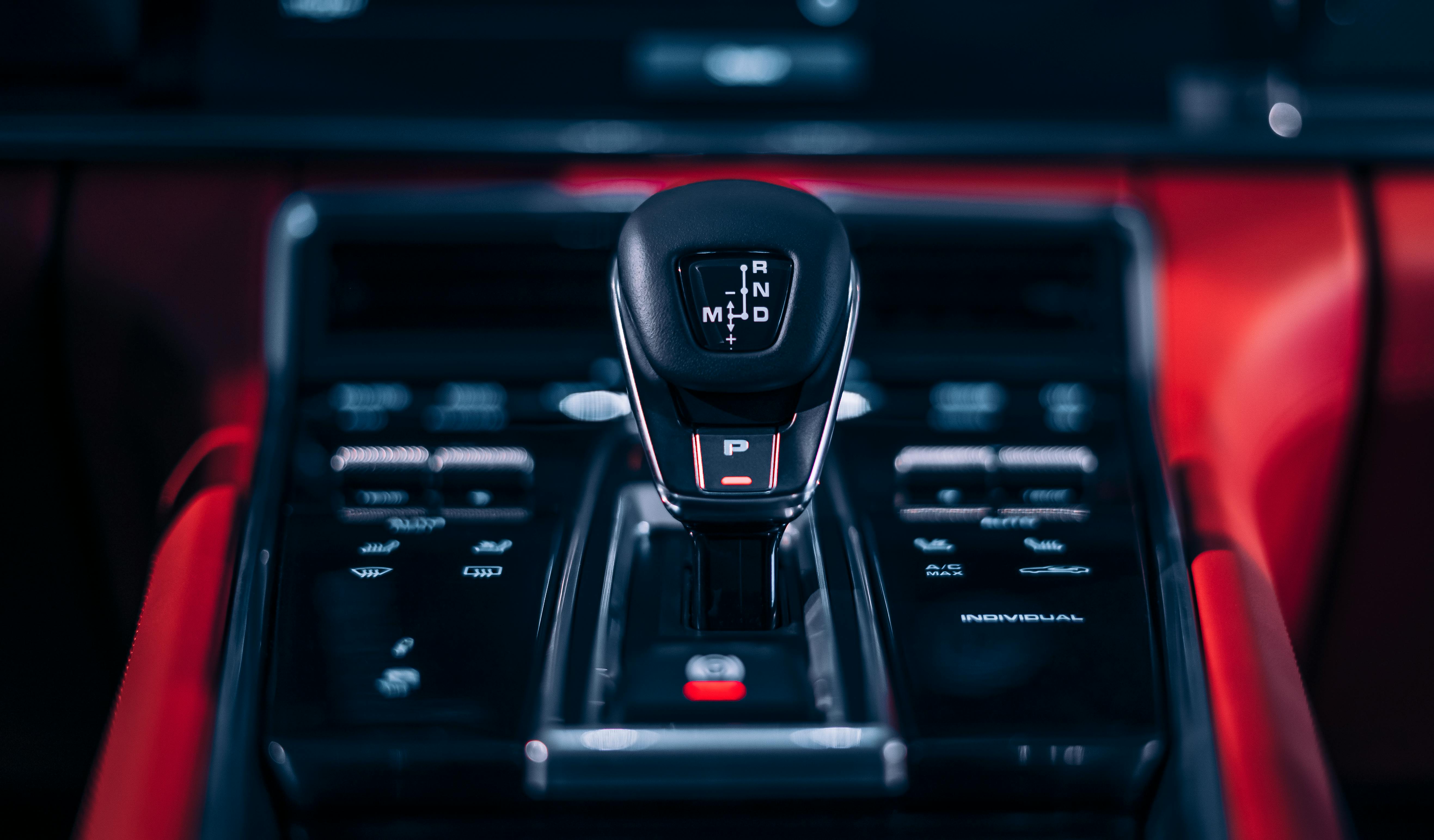
This verdict was correct for decades. The classic torque-converter automatics that dominated well into the 2000s operated with efficiency losses through the hydraulic torque converter and often selected the next gear earlier or later than necessary, which was directly reflected in fuel consumption. A skilled manual driver could move the same model noticeably more economically than the automatic version. At the time, the advice was technically sound.
Modern gearbox designs have reversed this equation. DSG dual-clutch units, continuously variable CVT transmissions and 8- or 9-speed torque-converter automatics select the optimal gear faster and more precisely than a human driver in every driving mode, and they do so consistently over the entire journey without fatigue and without sub-optimal gear choices in city traffic. Tests by the TCS and ADAC regularly confirm that current automatic vehicles achieve comparable or lower fuel consumption than their manual equivalents, especially in city driving and stop-and-go conditions.
In Switzerland the share of newly registered automatics is rising continuously, which is also relevant for driving schools and licence categories. Anyone who takes the driving test exclusively with an automatic today receives a category B licence restricted to automatic vehicles. The fuel-consumption argument against automatics no longer holds for current models.
Verdict: Outdated — modern automatics are often more efficient
Myth 7: Electric Cars Are Useless in Winter
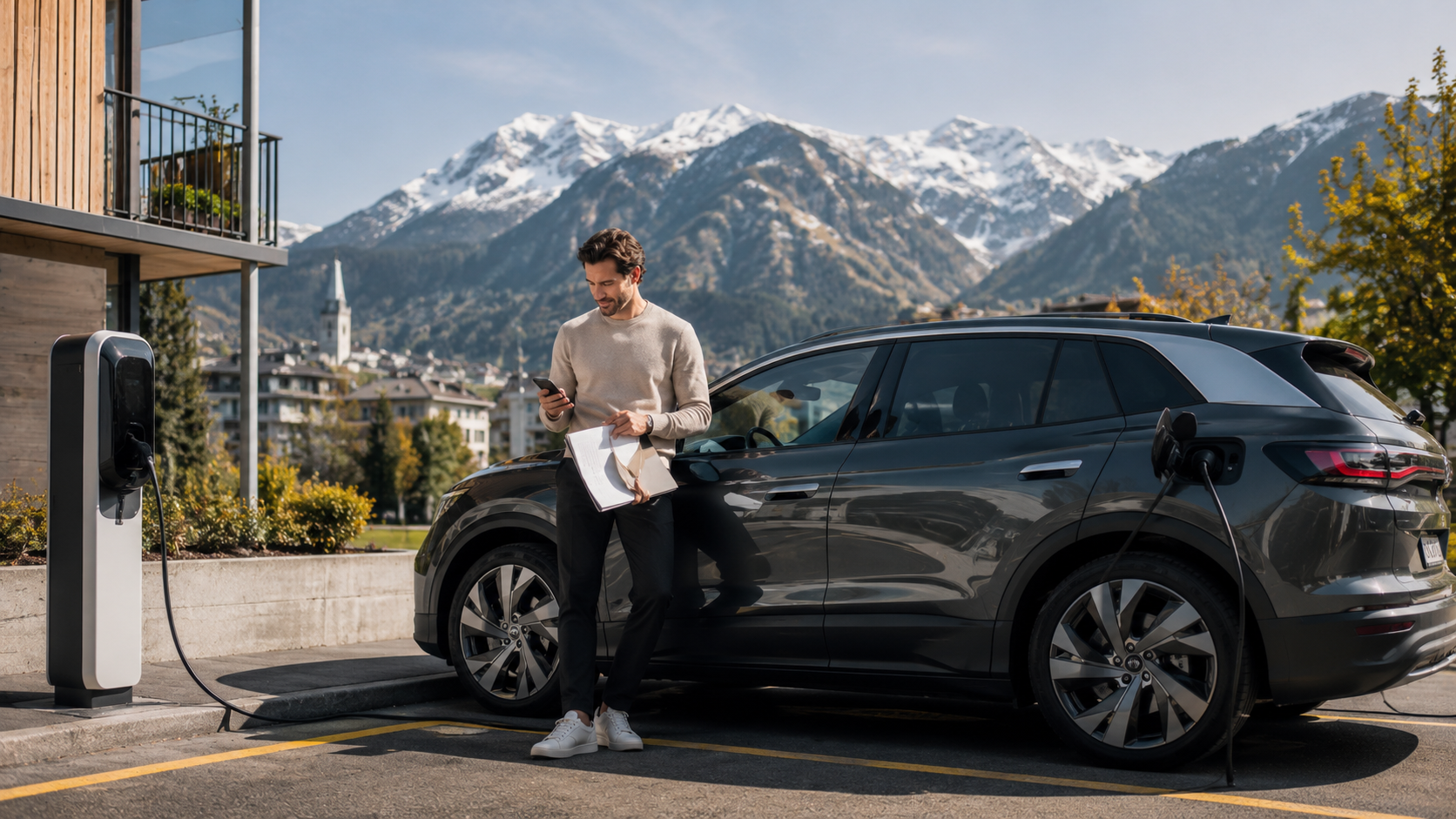
The range loss of electric vehicles in cold weather is real and should not be downplayed. At temperatures around or below zero, usable battery capacity drops by 20 to 30 percent depending on the vehicle, because lithium-ion cells release energy more slowly in the cold and cabin heating draws significant power. This is a physical fact, not a marketing problem.
What does not follow from this is "useless". Current electric models such as the VW ID.4, the BMW iX or the Tesla Model 3 still achieve practical ranges of 200 kilometres and more at minus ten degrees Celsius, which is sufficient for the vast majority of everyday Swiss mobility. The TCS winter test confirms this annually with concrete measurements for various vehicle classes. For more tips, see our guide to electric cars in winter.
Pre-conditioning the vehicle at the charging station, meaning pre-heating the battery and cabin before setting off, noticeably reduces the winter loss. Heat pumps, which are often fitted as standard in newer models, work more efficiently than conventional resistance heaters and preserve range. In the Valais or Graubünden with long mountain-pass drives and large altitude differences, it pays to plan the route in advance.
Verdict: Exaggerated — fully winter-capable with the right preparation
Myth 8: The Car Needs an Oil Change Every 10,000 km
The 10,000-kilometre rule of thumb had its justification in the 1980s and early 1990s. Conventional mineral motor oils degraded faster, engine tolerances were wider, and the service concept relied on fixed mileage intervals. At the garage reception and in the handbook it said 10,000 km, and for the technology of the time that was a sensible rhythm.
Modern engines use synthetic long-life oils such as 0W-30 or 5W-40 that are designed for significantly longer intervals. Electronic service-interval displays no longer calculate the oil-change point by kilometres driven but by operating data such as engine temperatures, load and short-trip frequency. Depending on the model and driving profile, intervals of 20,000 to 30,000 kilometres can result.
An important exception applies to short-trip drivers, who are common in Swiss cities. On trips under five kilometres the engine rarely reaches operating temperature, condensation collects in the oil and stresses it more heavily than long-distance driving. For this driving profile an annual oil change is recommended regardless of mileage. The most reliable reference point remains the manufacturer's specification in the on-board manual.
Verdict: Outdated — intervals depend on the vehicle and driving profile
Myth 9: Driving in the Mountains Uses Significantly More Fuel
Anyone driving up the Gotthard or the Simplon feels the extra consumption directly: engine load rises considerably, the vehicle works against gravity, and the consumption gauge in the cockpit climbs accordingly. But looking only at the uphill section and concluding that Swiss mountain drives are fundamentally much more expensive than flat routes only tells half the story.
What is consumed going up is at least partially recovered coming down: in conventional vehicles through engine braking and reduced fuel input, and in electric and hybrid vehicles through active regenerative braking that converts kinetic energy back into electricity. Over a complete pass crossing, the additional and reduced consumption largely balance out, and the average speed on mountain roads is typically much lower than on motorways, which further reduces overall consumption.
For electric vehicles, mountain driving is particularly efficient when calculated over the full route: regenerative braking on the descent can recover a substantial portion of the energy used on the climb, and trips through the Gotthard Base Tunnel or the route over the Great St. Bernard show how ascent and descent can largely neutralise each other in total consumption. For Swiss commuters and touring drivers this means the often-cited extra strain of mountain routes turns out to be less dramatic in practice than assumed.
Verdict: Partly true — over the full route the extra consumption is put into perspective
Myth 10: Newer Cars Are Always Safer Than Older Ones
The basic statement is correct. Assistance systems such as ABS, ESP, automatic emergency braking, lane-keeping assistants and cross-traffic warnings, which are fitted as standard in modern vehicles, measurably improve both active and passive safety compared with vehicles from the 1990s or early 2000s. Euro NCAP crash-test ratings make this improvement objectively comparable.
What this myth overlooks is the factor of maintenance condition. A carefully maintained car from 2010 with freshly replaced brake discs, correct tyre pressure, intact lighting and a functioning ABS can react more safely in critical situations than a neglected 2022 vehicle with worn tyres, an overdue brake inspection and a faulty sensor. Age does not protect, but consistent maintenance does, to a degree that is often underestimated.
In Switzerland the vehicle inspection (MFK) ensures that cars are checked for roadworthiness at regular intervals, which at least partially secures the maintenance condition of older vehicles institutionally. Four years after first registration and every two years thereafter, every vehicle must pass the inspection, and any faults identified cannot be signed off without being rectified. Anyone who keeps their older vehicle MFK-compliant and conscientiously maintained drives more safely than someone who neglects a newer model and relies solely on the assistance systems. With a car subscription, maintenance is always included, so you never have to worry about missed service intervals.
Verdict: Mostly true — but maintenance condition is decisive
Conclusion: What Remains from the Car-Myth Check?
Of the ten myths examined, three turn out to be completely false, three are technically outdated and therefore practically irrelevant, and four contain at least a kernel of truth worth understanding more closely. The pattern is the same everywhere: what once applied to a particular technology was never updated when the technology changed, and in the best case that only costs a bit of money, in the worst case it costs road safety.
This is not a criticism of drivers but an argument for asking questions. Anyone who buys an electric car today or drives a newer vehicle with direct injection should not approach maintenance and driving habits with a 1995 knowledge base. New technology brings new rules of thumb, and around electric mobility and autonomous driving the next myths are already forming.
Which car myths do you come across in everyday life? Leave a comment or read on in our guides about car subscriptions.
Frequently Asked Questions
Are more expensive branded fuels really better for the engine?
For everyday vehicles the difference is not detectable in practice, because all Swiss fuels must comply with the EN 228 standard. Branded fuels with proprietary additives can offer a marginal benefit for high-performance engines. Anyone who does not drive a sports car saves money by using cheaper fuel without any drawback for the engine.
Should I really let my engine idle to warm up in winter?
No. With modern fuel-injection engines, stationary warm-up is counterproductive: it increases consumption, promotes soot build-up and oil dilution and offers no protection for the engine. The correct method is to drive off immediately with a gentle driving style for the first few minutes until the engine reaches operating temperature. For more winter driving tips, see our dedicated guide.
Is it true that red cars get caught by speed cameras more often?
No, this is another myth without any statistical basis. Radar and laser speed-measurement devices respond to speed, not colour. Red cars may be more eye-catching in traffic, which can create the subjective impression that they are checked more frequently. Colour is equally irrelevant for insurance purposes.
How often should I check tyre pressure in Switzerland?
At least once a month, before long trips and during pronounced temperature swings, which occur in Switzerland particularly in spring and autumn. The check should always be carried out on cold tyres, because driving heat can raise the pressure by up to 0.3 bar. The recommended value can be found in the vehicle handbook or on the fuel filler cap.