Car Residual Value: Why the 2026 Residual Value Forecast Could Become a Risk Trap
 Kamilya
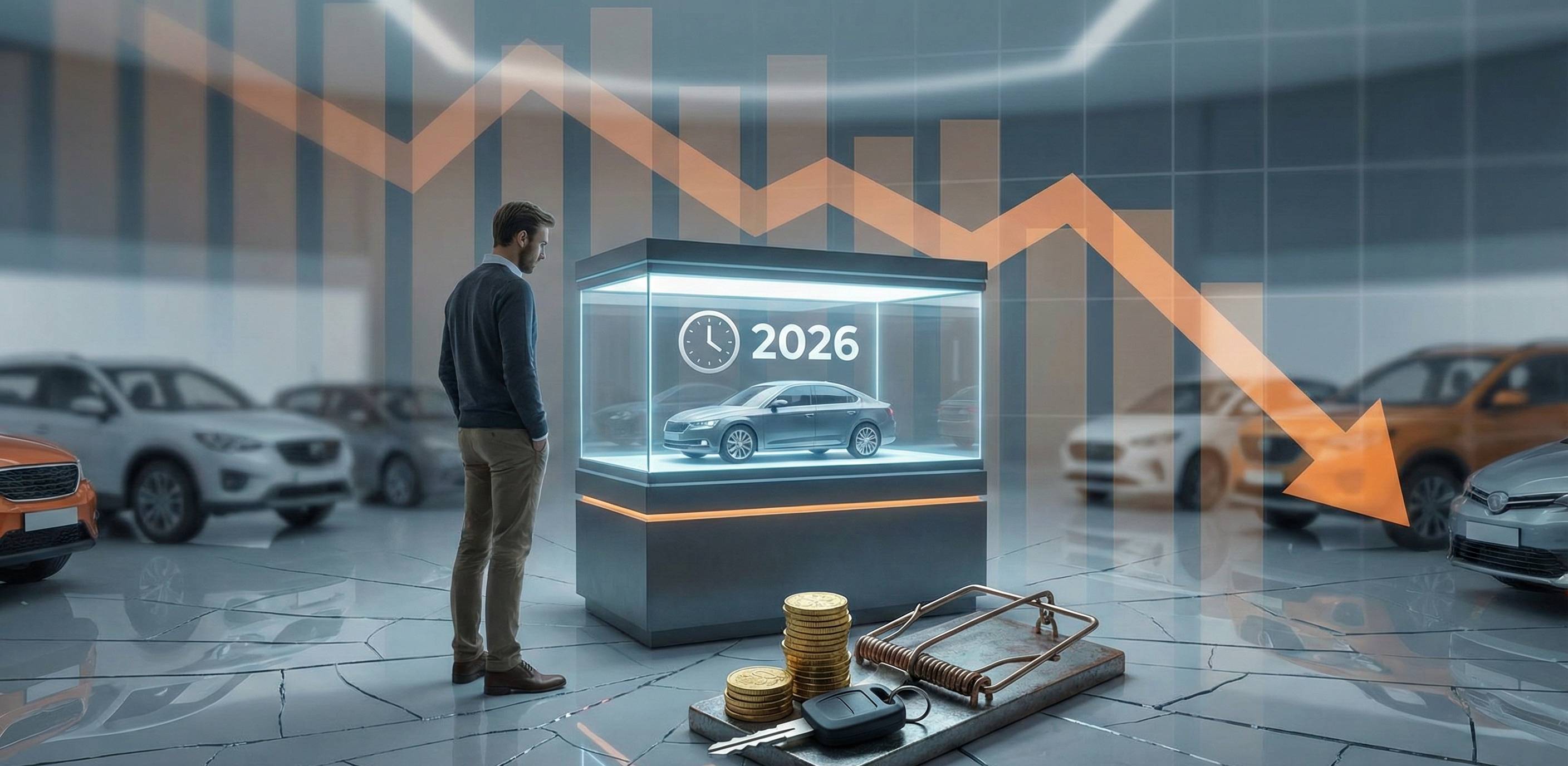
Your car’s residual value determines whether you come out ahead in the end or end up paying significantly more. Whether you buy or lease, this figure defines what mobility really costs you. What was fairly predictable for years will turn into a gamble in 2026 — and the old rules of thumb? You can forget them.
The automotive world is being turned upside down. Brussels is reshaping the entire market with new regulations, while electric vehicles are making rapid technological leaps. Switzerland is adapting quickly to these changes. The result? Residual value forecasts are becoming little more than guesswork.
If you rely on the wrong figures, it can get expensive later on. Thousands of francs may suddenly be due. Leasing customers in particular often face a rude awakening at the end of their contract when the final bill turns out far higher than expected.
What You’ll Learn in This Article
After reading this article, you’ll understand how residual value forecasts work and why they are becoming so unreliable in 2026. You’ll learn about the market shifts driving depreciation and discover the financial pitfalls that result from poor forecasts.
I’ll also show you which vehicle types are under the greatest pressure and how this affects different financing models. By the end, you’ll know concrete strategies to avoid these risks — or at least significantly reduce them.
What Does a Car’s Residual Value Mean — and Why Is It So Important in 2026?

Residual value indicates the estimated worth of your vehicle at a specific point in time. It sounds simple, but it has a major financial impact. Leasing rates are calculated based on the difference between the new car price and the projected residual value. Buyers also rely on expected depreciation when planning resale.
For decades, vehicle values followed predictable patterns. Brand, model, mileage, and condition determined depreciation according to well-established rules. Experts could rely on historical data that worked consistently over time.
In 2026, however, these structures are breaking down entirely. EU regulations directly influence the Swiss market, while disruptive technologies are fundamentally changing consumer preferences. Electric mobility is actively displacing traditional powertrains. These simultaneous upheavals render established forecasting methods largely ineffective and significantly increase the margin of error.
How Is a Residual Value Forecast Created?
Residual value forecasts are based on sophisticated models that combine hundreds of variables. Experts analyze historical value trends of comparable models, assess current market dynamics, and factor in announced model updates.
Technical specifications play a key role. Engine type, transmission, optional equipment, and expected reliability are fed into complex algorithms. External factors such as fuel prices, environmental regulations, and economic conditions complete the picture. Computers then calculate the most likely future value.
However, these models only work reliably under stable conditions. Even small changes in critical parameters can lead to major deviations. When multiple unpredictable developments occur at once, analytical forecasting turns into pure speculation — exactly the situation expected in 2026.
New technologies make things even more complicated. Gasoline and diesel engines have decades of documented value trends, while electric vehicles lack long-term data. As a result, every EV forecast remains highly speculative.
Car Depreciation Forecast 2026: Developments Shaping the Market
The 2026 depreciation outlook is influenced by massive structural changes. Regulatory measures are setting the pace: stricter emissions standards and tighter environmental requirements are radically shifting demand between drivetrain types.
Technological breakthroughs in battery development are revolutionizing electric mobility at breathtaking speed. What is considered cutting-edge today may already be outdated by 2026. At the same time, driver assistance systems continue to evolve, constantly reshaping how safety features are valued.
Market dynamics further amplify uncertainty. Global production capacity for electric vehicles is expanding rapidly, causing supply to surge. At the same time, demand for internal combustion engines could collapse faster than expected if social priorities shift suddenly.
Macroeconomic factors add another layer of complexity. Energy prices, inflation, and interest rates influence purchasing power and financing attractiveness alike. These factors directly affect the used car market and shape overall value trends.
What Risks Arise from an Incorrect Residual Value Forecast?
Overly optimistic residual value assumptions can seriously disrupt your budget. Leasing customers may have to pay additional charges if the actual market value at contract end falls below the original estimate. This unexpected difference comes straight out of pocket and overturns the original cost calculation.
Buyers face different challenges. Anyone planning to sell after a few years may be unpleasantly surprised by unexpectedly low resale prices. Instead of manageable depreciation, significantly higher ownership costs emerge.
The situation becomes especially risky with financed purchases. If the market value drops below the remaining loan balance, negative equity occurs. Escaping this situation requires additional payments, significantly limiting financial flexibility.
The risk multiplies if the sale proceeds are intended to fund the next vehicle. Lower resale values mean less available capital, either restricting mobility choices or resulting in less favorable financing terms.
https://preprod.carify.me/en/buy-a-car-in-switzerland
Residual Value vs. Actual Market Value: Why Forecasts Often Miss the Mark
Projected values and achievable market prices can differ substantially. Market shifts often occur faster than anticipated, and a technologically superior new model can make established vehicles seem outdated almost overnight.
Unpredictable events regularly disrupt market stability. Economic crises, pandemics, or political shifts can abruptly alter demand. Technological breakthroughs by competitors or changes in subsidy programs can immediately impact pricing.
Regional differences are often underestimated despite their significance. Forecasts typically rely on national averages, while local markets may behave very differently. Cities with strict environmental zones can devalue certain vehicle types faster than rural areas.
Data availability strongly influences forecast accuracy. Rare models or brand-new technologies lack sufficient market data for reliable predictions. Seasonal price fluctuations are sometimes overlooked, even though they can create substantial differences.
Which Vehicle Types Could Be Most Affected by Depreciation in 2026?

Different vehicle categories will face varying levels of price pressure in 2026. Combustion-engine small cars are particularly vulnerable as urban centers increasingly shift toward electric alternatives. Compact dimensions — once a major advantage — are now also offered by EVs thanks to improved battery technology.
Luxury sedans with large diesel engines face similar challenges. Stricter environmental regulations and a societal shift toward sustainable mobility hit this segment hard. High-consumption models with outdated emissions technology are especially exposed.
Electric vehicles carry different risks. Older models with limited range or slow charging capabilities may quickly become obsolete due to rapid technological progress. Battery capacity is a key factor in value retention, and vehicles with declining battery performance depreciate disproportionately.
SUVs and off-road vehicles occupy a middle ground. While demand for larger vehicles persists, criticism of their environmental impact continues to grow. Electrified versions benefit from this trend, while conventional models face increasing pressure.
How Can Residual Value Risks Be Reduced?
Conservative planning offers the best protection against unpleasant surprises. Assuming more pessimistic value trends than official forecasts suggest creates a buffer against unforeseen market developments and avoids shocks at resale or vehicle return.
Vehicle selection plays a crucial role. Proven models from established manufacturers with stable market positions tend to depreciate more predictably than experimental or niche vehicles. A balanced configuration — neither bare-bones nor fully loaded — also helps avoid extreme value loss.
Continuous market monitoring enables early trend detection. Tracking price developments of comparable vehicles and paying attention to new model announcements allows timely strategy adjustments.
Flexible contract structures provide valuable room to maneuver. Excessively long commitments should be avoided, while special termination rights or adjustment options can be highly beneficial. Early return or vehicle swap options become especially valuable when market conditions deteriorate.
Why Flexible Models Like Car Subscriptions Reduce Residual Value Risk
Car subscriptions completely eliminate residual value risk for users. The provider handles vehicle procurement and assumes the resale risk at the end of the term. You pay a fixed monthly fee and don’t have to worry about future value fluctuations.
Compared to traditional financing models, this structure offers clear advantages. Buyers bear the full residual value risk, while leasing customers are liable for shortfalls. A car subscription transfers this responsibility entirely to the provider.
The flexibility of subscriptions allows quick responses to market changes. If a vehicle type loses value unexpectedly, switching to another model after the minimum term is straightforward. This adaptability will be particularly valuable in 2026, when markets remain in flux.
Key Takeaways
Residual value forecasts for 2026 are exceptionally unreliable due to simultaneous technological, regulatory, and market-driven disruptions. Incorrect assumptions can lead to significant financial losses, especially in leasing and planned vehicle changes.
Different vehicle types carry different risk profiles: combustion engines in urban areas, older electric vehicles, and large diesel models are particularly exposed. Conservative planning and flexible contract structures help mitigate these risks.
Car subscriptions offer full protection against residual value risk and allow flexible adaptation to market changes — advantages that become especially relevant in uncertain market phases like 2026.
Conclusion: What Does This Mean for Your 2026 Decision?
The unusually high level of forecasting uncertainty in 2026 requires a fundamentally different approach to mobility decisions. Traditional financing models with high residual value exposure are becoming increasingly risky, while flexible alternatives are gaining appeal.
Those who prioritize cost certainty and financial control should favor models that minimize residual value risk. Car subscriptions combine this security with flexibility, offering an elegant solution to the forecasting dilemma.
Ultimately, the decision depends on individual risk tolerance. Some accept potential losses in exchange for ownership benefits, while others prefer fixed costs without residual value exposure. This personal assessment will determine which model is right for 2026.
Frequently Asked Questions
How Does Mileage Affect Residual Value?
Mileage has a direct impact on residual value, with effects varying by vehicle type. Lower mileage vehicles achieve higher market prices, as buyers perceive them as less worn.
The effect is particularly pronounced for premium vehicles. Exceeding typical annual mileage of 15,000 to 20,000 kilometers can disproportionately reduce residual value. Significantly lower mileage helps stabilize value but does not automatically offset other negative factors such as technological obsolescence.
Are Electric Vehicles Especially Risky in Terms of Residual Value in 2026?
Electric vehicles face specific risks in 2026, primarily due to rapid technological advancement. New battery technologies with higher capacity and efficiency can quickly render older models obsolete. Charging speed and driving range continue to improve as well.
Battery capacity is the decisive factor: vehicles with declining battery performance lose value disproportionately. At the same time, limited long-term data makes reliable forecasts difficult, further increasing uncertainty.
What Should You Do If the Actual Market Value Is Unexpectedly Low?
If market value turns out lower than expected, several options are available. Reconsidering the timing of the sale can help, as prices fluctuate seasonally and regionally. Delayed sales or alternative sales channels may yield better results.
Investments in vehicle care or minor repairs can improve achievable prices. A professional vehicle valuation helps assess realistic market value and strengthens negotiation position. In leasing situations, it may also be worthwhile to explore goodwill arrangements or renegotiate with the leasing provider.