Winter Car Care - Protection Against Salt, Moisture, and Rust
 Kamilya

Winter Car Care - Protection Against Salt, Moisture, and Rust
Swiss winters are harsh on cars. While you enjoy the snowy mountain landscape, your vehicle is fighting road salt, moisture, and extreme temperature shifts. One day you get a sunny 8 degrees, the next day it drops to -12 - those sudden changes put stress on every material.
If you take good care of your car, you avoid that outcome. A well-maintained vehicle retains far more value than one that’s neglected through the winter. And what you spend on proper care is minimal compared to later repair costs.
Here you’ll learn how to protect your car through the cold season, what the main risks are, and what actually works.
What you will learn in this article
Why salt, moisture, and cold damage your car in winter.
How to wash, dry, and care for your car properly to prevent rust.
Which areas inside the car are particularly vulnerable in winter.
Which protective measures help maintain your car’s value long-term.
When a winter-ready car subscription can be a simple and stress-free solution.
Why winter conditions are a real strain on your car
Road salt is extremely corrosive. It attacks the underbody, wheel arches, and every metal part that touches the road. Even modern paint systems can only withstand it to a limited degree.
Tiny stone chips turn into weak spots. Any small scratch becomes an entry point for salt and moisture. Rust develops from the inside out - and you often only notice it once larger areas are affected.
Moisture makes everything worse. Melted snow creeps into every gap, mixes with salt, and creates a corrosive sludge. Particularly tricky: door folds, sills, and other hidden areas.
Cold temperatures add more stress. Rubber becomes brittle, plastic loses flexibility, and paint reacts more sensitively to damage. Material fatigue creates even more weak points.
Just one tough winter can cause damage that costs more than years of routine care. I learned that the hard way.
Winter car care - the most important basics
Washing your car in winter: useful or risky?
Many drivers are unsure whether frequent washing helps or harms. The answer is clear - washing protects your car. Salt needs to be removed before it causes damage.
Recommendation: at least every two weeks, and weekly when heavy salt is used. Sounds like a lot? With the right approach, it’s manageable.
Hand washing gives you maximum control, but requires warm water and a sheltered place. Self-service washing bays are ideal: heated, flexible, and thorough. Automatic car washes with underbody cleaning work too, as long as the car is properly pre-rinsed.
Important: never wash your car during frost or when freezing temperatures are expected. Wait for milder days or use heated facilities. After fresh snowfall or heavy salt application, don’t wait long. Further practical preparation tips can also be found in our winter-readiness guide.
Drying and after-treatment
Many people make the biggest mistake: they think washing alone is enough. Standing water freezes - and causes damage. Use lint-free cloths or compressed air to remove water from all the gaps.
Door seals, window seals, and wheel areas often hold water stubbornly. Miss a spot once, and problems follow.
After drying, treat the seals. Silicone spray or dedicated rubber care keeps door seals flexible. Frozen-shut doors? Not with proper care.
Rims also need attention. Brake dust mixed with salt is harmful to alloy wheels. Use a good wheel cleaner, then apply a sealant - problem solved.
Don’t forget the windows. Salt residue affects visibility and can damage the glass when it freezes. Clean with glass cleaner and care for the seals to maintain clear visibility.
Interior care in winter
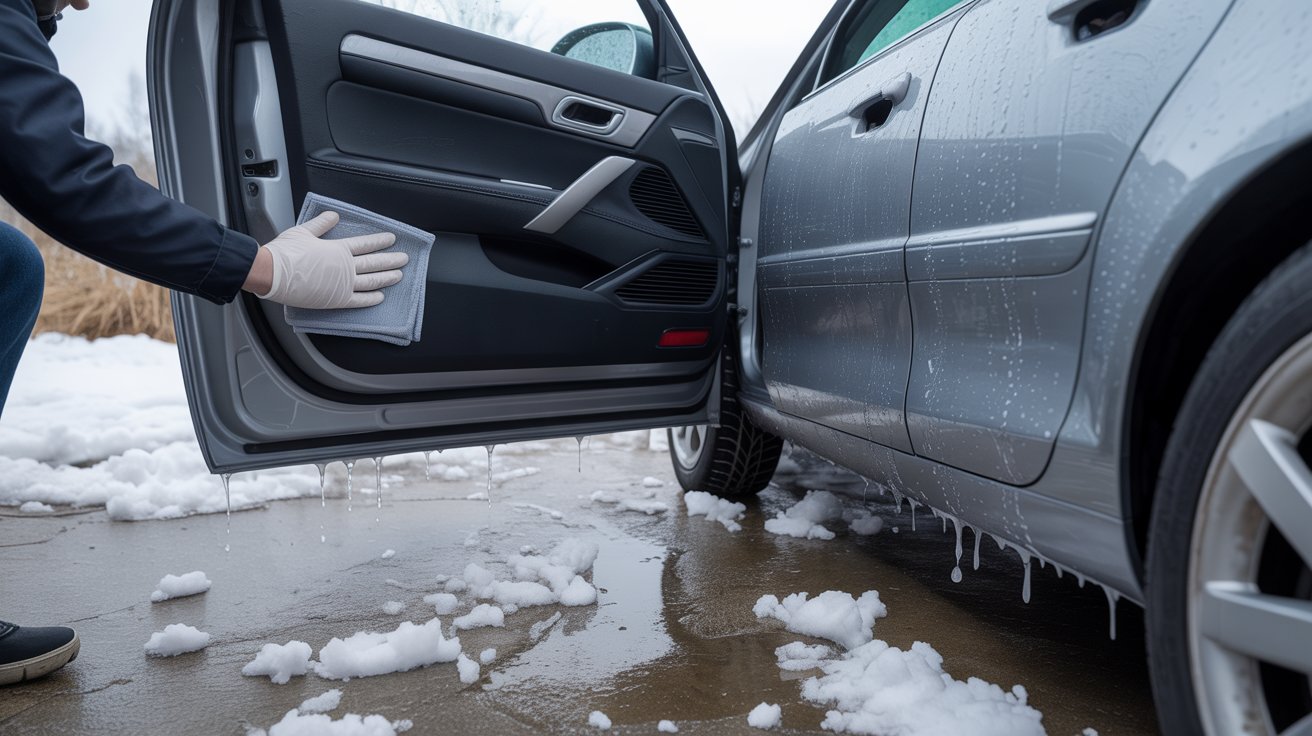
The interior suffers more than you think. Slush from your shoes brings moisture inside, leading to fogged windows, musty smells, or even mold.
Remove textile floor mats regularly and let them dry properly. Rubber mats are easier to handle, but they still need to be cleaned of salt deposits.
The ventilation system runs constantly in winter, causing the pollen filter to clog faster. A blocked filter reduces heating performance and lowers air quality.
Leather seats dry out from heating air; regular conditioning keeps them supple. Plastic surfaces also benefit from occasional care to prevent brittleness.
Rust protection and paint care: how to protect your car long-term
Checking or renewing underbody protection
The underbody takes the biggest beating. Salt, gravel, and constant moisture hit it directly. An intact protective coating is your best defence, but it wears down over time.
A professional treatment costs 150-400 francs. It sounds like a lot, but it’s cheap compared to rust repairs. Older vehicles benefit especially because factory coatings degrade over time.
How often should it be renewed? It depends on mileage and where you drive. As a guideline: have it checked every three to five years. Experienced workshops can immediately tell whether action is needed.
Paint sealants: wax, nano, or ceramic?
You have several options. Traditional carnauba wax is easy to apply and looks good, but lasts only a few months. Synthetic waxes offer longer protection with similar application effort.
Nano sealants go further: a harder protective layer with better water and dirt repellence. They make cleaning easier afterward and can last up to a year. They cost more, but they’re worth it.
Ceramic coatings are the top tier. They offer extremely strong protection that can last for years. They are more expensive, but great for high-value vehicles or frequent drivers. Application should be done by professionals, because mistakes are difficult to fix.
Common mistakes in winter car care
The biggest mistake is not washing often enough. Many people think, “It’ll just get dirty again.” But salt keeps working, and the longer it stays on the car, the more damage it causes.
Poor drying is just as harmful. Door seals freeze, locks ice up, and windows fog constantly. If water gets into the electrical system and freezes, repairs get very expensive.
Wrong care products make things worse. Household cleaners damage paint and seals. Don’t save money in the wrong place - use proper automotive products.
Many people only focus on visible areas. But the biggest risks hide where you don’t see them: the underbody, door folds, and hard-to-reach areas.
Checklist: how to keep your car winter-ready
A systematic approach ensures you don’t overlook important steps. These are the key tasks for the cold season.
Washing schedule: at least every two weeks, including underbody cleaning. More often with heavy salt use.
Paint protection: applying a sealant before winter saves time and prevents extra work later.
Seal care: silicone spray prevents freezing and extends lifespan.
Keep the interior dry: air out the car regularly, dry mats, and service the air-conditioning system.
Early detection: treat rust spots immediately.
This routine takes little time but saves a lot of money. Well-maintained cars keep their value and cause fewer problems.
A car subscription can also be a smart alternative: winter-ready vehicles, professionally prepared, without you having to do any of the work.
Key Takeaways
Salt and moisture are the main causes of winter damage to cars.
Regular washing and thorough drying help prevent rust and material wear.
Interior care reduces moisture, odours, and fogged windows.
Proper underbody and paint protection prevent costly repairs in the long run.
Winter-ready car subscriptions offer a convenient, low-maintenance option during the cold season.
Conclusion: winter care pays off
Regular winter maintenance is a smart investment. It prevents damage, preserves value, and ensures reliable mobility. Winter conditions may seem overwhelming, but with the right approach, they are manageable.
Salt and moisture become far less threatening when you work systematically. Preventive care costs only a fraction of what repairs would.
CARIFY offers winter-ready cars through a flexible subscription model. All vehicles are professionally prepared and maintained - you simply get in and drive safely through the winter. No salt stress, no rust worries, no time-consuming maintenance.
Explore CARIFY’s winter-ready vehicles and enjoy worry-free mobility without extra effort. Just get in and drive. Discover winter-ready cars now and experience the convenience of a fully maintained subscription car.
FAQ
How often should you wash your car in winter?
At least every two weeks; weekly when salt levels are high. Never wash during frost and always include underbody cleaning.
Is underbody protection really necessary?
In Switzerland, definitely recommended. It protects against salt and moisture and should be renewed every 3-5 years. The 150-400 franc cost is much cheaper than repairing rust damage.
Which care products offer the best rust protection?
High-quality paint sealants (nano or ceramic), specific underbody protection products, and rust-protection wax provide the best protection. Silicone sprays for rubber seals and chrome polish complement the routine. Avoid household cleaners - only use products designed for cars.